9/11 — 25 Years Later: When Atlantic Canada Opened Its Doors
Twenty-five years ago, on September 11, 2001, a terrible event in the United States changed the world — and brought thousands of unexpected visitors to Atlantic Canada.
The terrorist attacks in New York, Washington and Pennsylvania resulted in the closing of U.S. airspace. Hundreds of international flights were suddenly forced to find somewhere to land.
Canada responded through what became known as Operation Yellow Ribbon.
Atlantic Canada played an enormous role.
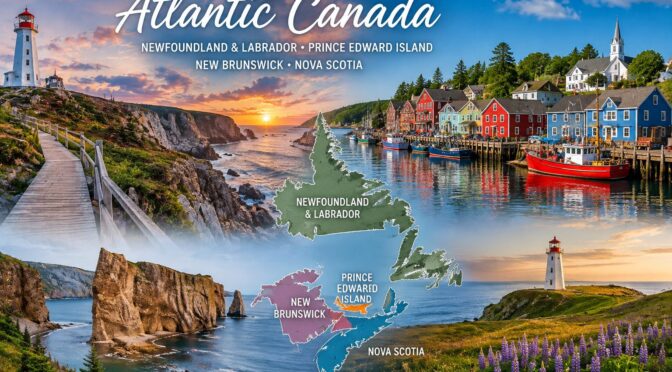
Among the communities that suddenly found themselves at the centre of an international crisis were Gander and St. John’s, Newfoundland and Labrador, Halifax and other communities throughout the Maritimes — including Moncton in New Brunswick.
Gander: a small town welcomes the world
The story of Gander has become one of the most remarkable stories associated with September 11.
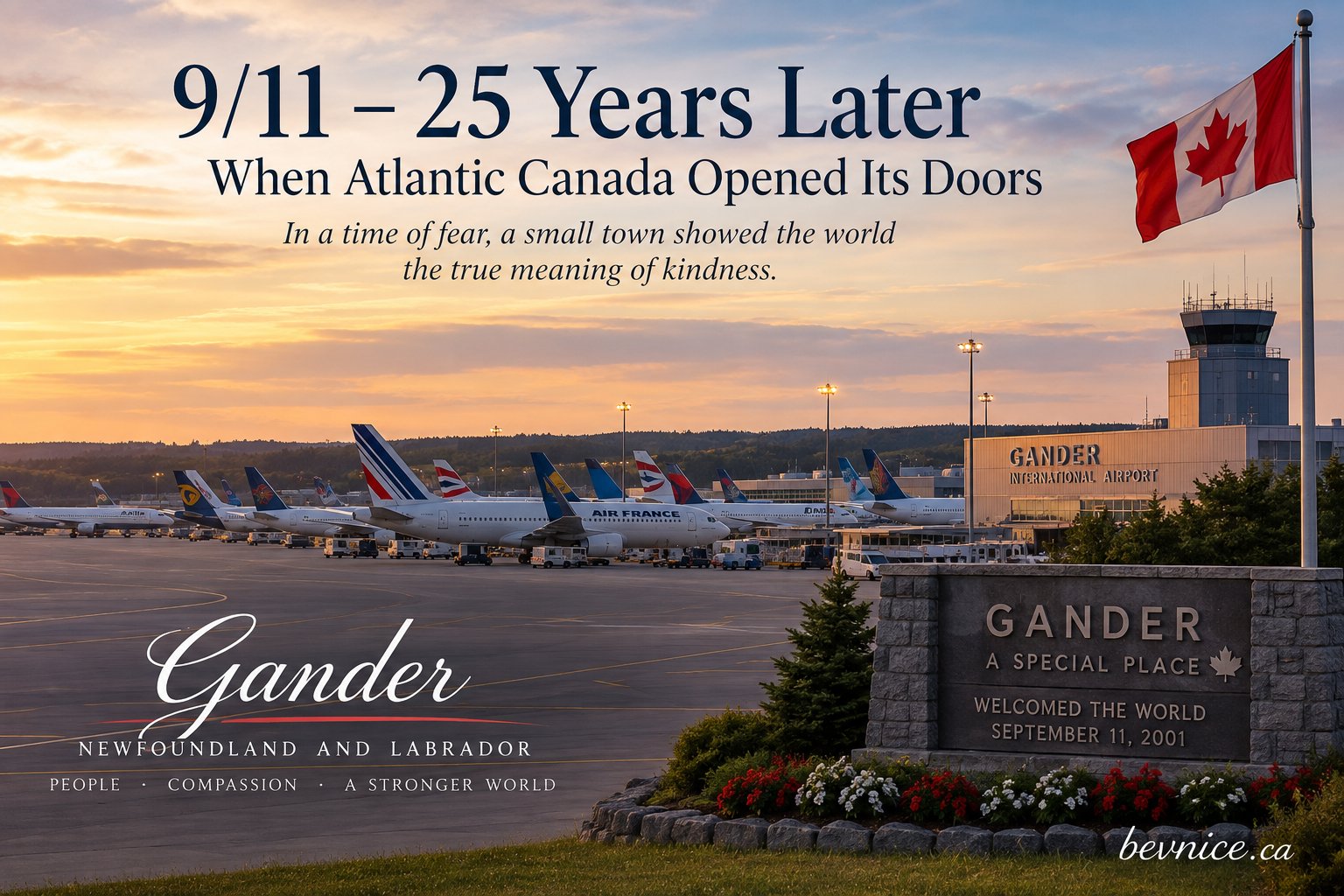
Thirty-eight international flights were diverted to Gander International Airport, carrying more than 6,500 passengers and crew. The town had a population of only about 10,000 at the time.
Suddenly, thousands of people needed food, accommodation, transportation and medical assistance.
Gander responded.
Schools, churches and other buildings became temporary shelters. Residents supplied food, clothing and other necessities. Many people opened their homes to complete strangers.
The passengers became known locally as the “plane people.”
The generosity of Gander eventually became famous around the world and later inspired the Broadway musical Come From Away.
St. John’s had thousands of unexpected guests
Gander was not the only Newfoundland community that responded.
Almost 5,000 passengers arrived in St. John’s, where approximately 40 locations were used to house and feed them. Local restaurants and hotels donated food, while churches, businesses and individuals contributed supplies and assistance.
More than 100 health-care professionals volunteered to help. A temporary medical clinic was established in the St. John’s Convention Centre, where doctors, nurses, social workers and counsellors cared for passengers.
For many travellers, one of the biggest problems was obtaining prescription medications because their luggage remained inaccessible during the security process.
Atlantic Canada answered the call
The response extended far beyond Newfoundland.
Transport Canada reports that 126 unexpected aircraft landed in the Atlantic Region, carrying thousands of passengers from around the world. Airports in Atlantic Canada accepted more than half of the diverted flights coming into Canada.
Flights were diverted to communities including Gander, Goose Bay, Stephenville, St. John’s, Halifax and Moncton.
Halifax alone received approximately 8,800 passengers on 44 international flights.
This was an extraordinary logistical challenge.
Airports suddenly had aircraft and passengers far beyond their normal capacity. Security personnel, airport employees, government officials, police, medical workers, volunteers, hotels, restaurants and ordinary citizens all had to work together.
What about Saint John?
For people in Saint John and southern New Brunswick, the events were unfolding relatively close to home.
New Brunswick was part of the wider Atlantic Canadian response to Operation Yellow Ribbon, with Moncton among the Canadian communities receiving diverted aircraft.
The important point is that this was not simply a story about one Newfoundland town.
It was an Atlantic Canadian story.
From Newfoundland to Nova Scotia and New Brunswick, communities suddenly found themselves helping people who had been thrown into a frightening and confusing situation.
The people arriving had no idea how long they would remain in Canada.
Many had no luggage.
Some had no medication.
Almost everyone was worried about family members and friends back home.
A different kind of September 11 story
When we remember September 11, we naturally remember the terrible loss of life in the United States.
But 25 years later, there is another part of the story worth remembering.
There were people who helped.
There were communities that opened their doors.
There were strangers who provided meals, beds, clothing, transportation and friendship.
There were doctors and nurses who volunteered.
There were police officers and emergency workers who kept people safe.
There were airport employees who worked extraordinary hours.
And there were ordinary Atlantic Canadians who simply asked:
“What can we do to help?”
That spirit was particularly powerful in Gander and St. John’s, but it was evident throughout Atlantic Canada.
Twenty-five years later
The passengers eventually continued their journeys.
But many never forgot the people who had helped them.
Gander became internationally associated with compassion during a moment of fear. Some former passengers returned years later to reconnect with the people who had welcomed them.
The Royal Canadian Air Force also played an important supporting role in Gander, providing logistical and humanitarian assistance during the crisis.
The story is now part of Canadian history.
For those of us in Atlantic Canada, it is also a reminder of something deeply important about our region.
When the world suddenly changed on September 11, 2001, Atlantic Canadians did not ask where the stranded passengers came from, what language they spoke or what country they called home.
They saw people who needed help.
And they helped them.
Remembering September 11
Twenty-five years later, we remember the victims of September 11, 2001.
We remember the families who lost loved ones.
We remember the firefighters, police officers, emergency workers and ordinary citizens who ran toward danger.
And here in Atlantic Canada, we should also remember the thousands of unexpected visitors who arrived at our airports during those frightening days.
They came as strangers.
Many left with memories of Atlantic Canadian kindness that lasted a lifetime.
September 11 was a day of tragedy — but in Atlantic Canada, it also became a remarkable story of compassion, cooperation and humanity.
Twenty-five years later, that is worth remembering.