
Category Archives: Weather

The Silent Threat: El Niño

 The Silent Threat: El Niño’s Role in the Climate Change Equation

    In the vast tapestry of our planet’s climate, few phenomena are as enigmatic and impactful as El Niño. Often misunderstood, sometimes underestimated, El Niño emerges periodically, wielding the power to reshape weather patterns across the globe. But within the broader context of climate change, its role takes on a new significance, one that demands our attention and understanding.

    El Niño, Spanish for “the boy” or “Christ child,” refers to the periodic warming of the central and eastern tropical Pacific Ocean. This seemingly localized event sets off a chain reaction, altering atmospheric circulation patterns, disrupting rainfall, and triggering extreme weather events worldwide. From droughts in Australia to floods in South America, its reach knows no bounds.

    However, El Niño’s impact is not confined to the immediate consequences felt during its occurrence. Rather, its influence reverberates through the intricate web of Earth’s climate system, intertwining with the broader narrative of climate change. As global temperatures rise due to human activities such as burning fossil fuels and deforestation, the dynamics of El Niño are undergoing subtle yet significant shifts.

    Scientists warn that climate change could intensify the frequency and severity of El Niño events, amplifying their socio-economic repercussions. The implications are profound, with vulnerable communities facing heightened risks of food insecurity, water scarcity, and displacement. Moreover, the interplay between El Niño and climate change can exacerbate existing environmental challenges, from coral reef degradation to biodiversity loss.

   Understanding the nexus between El Niño and climate change is not merely an academic pursuit but a call to action. It underscores the urgent need for concerted efforts to mitigate greenhouse gas emissions, adapt to changing climatic conditions, and build resilience in vulnerable regions. From implementing sustainable agricultural practices to investing in early warning systems, proactive measures are essential to safeguarding livelihoods and ecosystems alike.

    In confronting the complex realities of our changing climate, we must recognize El Niño as both a symptom and a catalyst of broader environmental transformations. By embracing science, fostering international cooperation, and embracing a collective sense of responsibility, we can navigate the challenges ahead and forge a more sustainable future for generations to come.

    Let us heed the lessons of El Niño, not as a harbinger of doom, but as a catalyst for resilience, innovation, and global solidarity in the face of climate change. The time to act is now.
Electric Vehicle ‘Euphoria is Dead

To the Surprise of No One

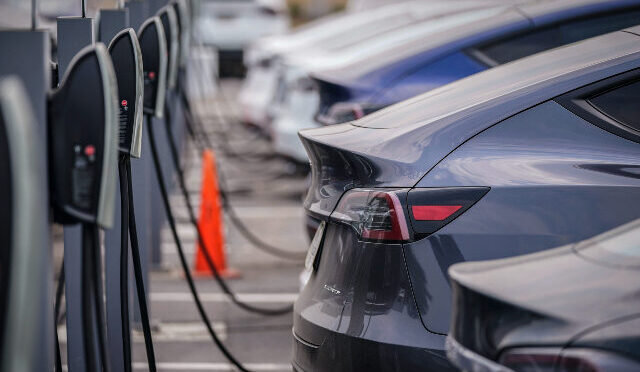
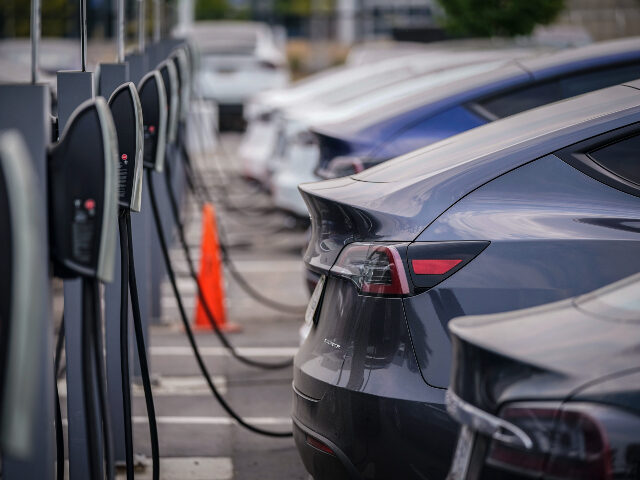
FILE - A group of Tesla cars line up at charging stations at a dealership in Littleton, Co
AP Photo/David Zalubowski, File
 

“Automakers from Ford Motor and General Motors to Mercedes-Benz, Volkswagen, Jaguar Land Rover and Aston Martin are scaling back or delaying their electric vehicle plans,” reports CNBC.

The headline says it all: “EV euphoria is dead. Automakers are scaling back or delaying their electric vehicle plans.”

Yeah, there’s a shock.

Gee, why-oh-why would people not want to purchase a super-expensive vehicle that can take more than an hour to charge — and that’s if you can find a charging station?

For years, the automotive industry has been in a state of EV euphoria. Automakers trotted out optimistic sales forecasts for electric models and announced ambitious targets for EV growth. Wall Street boosted valuations for legacy automakers and startup entrants alike, based in part on their visions for an EV future.

Now the hype is dwindling, and companies are again cheering consumer choice. Automakers from Ford Motor and General Motors to Mercedes-Benz, Volkswagen, Jaguar Land Rover and Aston Martin are scaling back or delaying their electric vehicle plans.

Even U.S. EV leader Tesla, which is estimated to have accounted for 55% of EV sales in the country in 2023, is bracing for what “may be a notably lower” rate of growth, CEO Elon Musk said in late January.

There is a host of other problems. Consumers are discovering a fully charged car does not last for as many miles as advertised. Cities are discovering their electric grids are in no shape to handle all the extra juice needed to power millions of electric vehicles.

EV sales are still expected to increase. Last year, they represented 1.2 million sales in the U.S. or 7.6 percent of total car sales. By 2030, that number is expected to climb somewhere between 30 and 39 percent (which still seems Pollyanna-ish to me). The movement now appears to be towards hybrids, which offer the best of both worlds. You have your battery and your gas-powered engine as a backup.

“EVs may be ‘the future’ but are struggling in the present,” per Morgan Stanley analyst Adam Jonas. “Hybrid sales are growing 5x faster than EVs in the US.”

The early adopters, the smug environmentalists and the trendy rich, have already bought in. Now, the car manufacturers have to encourage normal people, and we’re a little more circumspect. Do these cars really save you money? Sure, but only if you drive enough miles over ten whole years. At the same time, while EVs can cost less to maintain, they can also cost more to repair.

If you have a set routine, I get it. You unplug, drive from home to work, to the grocery store, to the gym, back to home, and plug back in. That makes sense for an EV. But the moment you have to drive outside of that comfort zone, it’s stress-out time. Will I find a charger along my route? Will the charger work? Will there be a line? How long will it take?

Naturally, the leftist Biden administration still plans to force the car industry into adopting impossible fuel standards and fining them billions if not met.

The Allance for Automotive Innovation weighed in:

The Alliance for Automotive Innovation, which represents General Motors, Toyota Motor, Volkswagen, Hyundai and others, said the National Highway Traffic Safety Administration Corporate Average Fuel Economy proposal “exceeds maximum feasibility” and that the agency projects “manufacturers will pay over $14 billion in non-compliance penalties between 2027 and 2032.”

Another estimate says, “such regulations would cost GM $6.5 billion in fines and Jeep parent Stellantis $3 billion. Ford’s “penalties would total about $1 billion.”

All of this, of course, will be passed on to the consumer,

This is the Green Religion, a fanatical faith that has nothing to do with science or economics. Democrats refuse to increase their electric grid even as they demand we buy electric cars that put more demand on the electric grid.