All posts by b nice

Semper Doctrina—we are always improving and adapting.

On This Day August 22

Notable Moments in Canadian History on August 22

  • 1914 – War Measures Act Enacted
    On this day, the Canadian government invoked the War Measures Act, granting extraordinary powers to manage the country’s efforts during the First World War

  • 2011 – Passing of Jack Layton
    Jack Layton, leader of the New Democratic Party and Canada’s Leader of the Opposition, passed away at age 61. His death prompted widespread national mourning, with federal buildings and the Peace Tower flag flown at half-mast Wikipedia.


Context from Broader Sources

  • OnThisDay.com highlights several events, including:

    • 1852: Tlingit people destroyed Fort Selkirk in the Yukon Territory—an event with territorial and Indigenous implications


Today’s Significance Beyond Canada

While these events may not be Canadian-specific, August 22 also marks some globally significant moments:

  • 1851 – America’s Cup Origin
    The schooner America won a race against British vessels, launching the iconic sailing competition known as the America’s Cup Michael Collins was assassinated during the Irish Civil War 

  • Other notable births and events on this date are detailed by sources like Britannica, though not focused on Canada 


Summary Table

Year Event
1914 War Measures Act enacted in Canada
2011 Death of NDP leader Jack Layton
1852 Tlingit destruction of Fort Selkirk (Yukon)

Current Status: 2025 Atlantic Hurricane Season (Atlantic Basin)


Current Status: 2025 Atlantic Hurricane Season (Atlantic Basin)

1. Season Overview

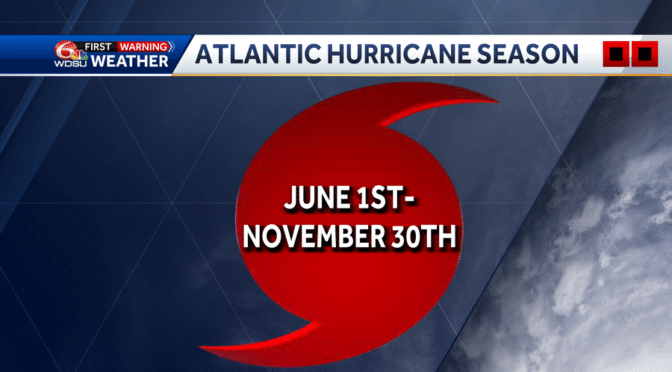
  • The 2025 Atlantic hurricane season officially runs from June 1 to November 30. Wikipedia

  • So far, five named storms have formed—all of which have strengthened into at least tropical storms. Wikipedia

  • Among these, only Hurricane Erin has reached hurricane intensity—and significantly, major hurricane strength (Category 3 or higher). Wikipedia+1

  • The season’s Accumulated Cyclone Energy (ACE) is approximately 31.0 as of August 20. Wikipedia

2. Storm-by-Storm Breakdown

  • Tropical Storm Andrea – First storm, formed June 23. Stayed over open water with minimal impacts. Wikipedia+1

  • Tropical Storm Barry – Formed June 28 in the Bay of Campeche. Made landfall near Tampico, Mexico. Wikipedia+1

  • Tropical Storm Chantal – Formed off the southeastern U.S. coast on July 4; made landfall in South Carolina. Wikipedia

  • Tropical Storm Dexter – Developed in early August along a stalled front off North Carolina before moving out to sea. Wikipedia

  • Hurricane Erin – The fifth named storm and first hurricane of the season. Formed near Cape Verde on August 11 and rapidly intensified to Category 5 by August 16, with maximum sustained winds of around 160 mph and a central pressure of about 915 mb. Wikipedia+1

    • Erin then weakened through an eyewall replacement cycle, dropped to Category 3, reintensified to Category 4, before weakening again to Category 2 by August 19. Wikipedia

    • Erin’s precursor caused nine fatalities in Cape Verde due to intense flooding. Wikipedia

    • It is currently impacting the U.S. East Coast, causing strong waves, rip currents, and prompting evacuations in parts of North Carolina.

3. Forecast Outlook

  • NOAA’s outlook predicts a 60% chance of an above-normal hurricane season, with 13–19 named storms, 6–10 hurricanes, and 3–5 major hurricanes expected.

  • An updated August outlook slightly reduces this, calling for 13–18 named storms, 5–9 hurricanes, and 2–5 major hurricanes.


Key Takeaways

  • Hurricane Erin is the standout: It’s the only hurricane so far, and dramatically intensified to Category 5—highlighting increased volatility, possibly linked to warming sea temperatures.

  • Early season activity has been moderate, though expectations remain for a busy peak season ahead.

  • Communities along the East Coast should remain vigilant, especially as Erin continues to generate dangerous surf and coastal flooding concerns.


Bottom Line:

The Atlantic hurricane season is underway with five named storms so far. Hurricane Erin has been the most intense—Cat 5 at its peak—and is currently affecting the U.S. East Coast. Seasonal forecasts point to continued activity through the fall.

On This Day Aug 18

Key Historical Highlights in Canada

1. Discovery Day in Yukon

  • In Yukon, Discovery Day is observed annually on the third Monday in August, commemorating the gold discovery at Bonanza Creek by Skookum Jim Mason (Keish) in 1896. This event catalyzed the Klondike Gold Rush and played a pivotal role in establishing Yukon as a Canadian territory National TodayTime and Date.

  • Celebrated with parades, cultural events, and festivals—particularly in Dawson City—the public holiday is deeply rooted in regional identity National Today.

2. Notable Birth—Jack Pickford (1896)

  • On August 18, 1896, Canadian-born actor Jack Pickford was born. He later gained fame in early Hollywood cinema and passed away in 1933 Wikipedia.

3. Death of Alfred Boyd (1908)

  • Alfred Boyd, the first Premier of Manitoba, died on August 18, 1908. His passing marks a significant chapter in the province’s early political history Wikipedia.

4. Celebrated Serviceman: Henry Thomas Shepherd (MBE)

  • It’s the birthday of Henry Thomas Shepherd, MBE (born August 18, 1895), a Black Canadian soldier who served with distinction in World War I—one of only 23 known Black soldiers at Vimy Ridge—and later became a Company Sergeant Major in WWII. He was awarded the MBE in 1944 ETFO.

5. Readers May Also Note

  • Although not uniquely Canadian, nearby: in 1938, President Franklin D. Roosevelt gave a speech at Queen’s University in Kingston, Ontario on August 18 during his visit to Canada Wikipedia.

  • On a global level, the Thousand Islands Bridge connecting New York and Ontario was dedicated on August 18, 1938 Wikipedia.

  • A tragic yet impactful event in Canada’s recent past: on August 18, 2003, Zachary Turner, a one-year-old in Newfoundland, was murdered by his mother—a case that led to significant bail-law reforms and inspired the documentary Dear Zachary Wikipedia.


Summary Table

Date Event
August 18, 1896 Birth of actor Jack Pickford
August 18, 1908 Death of Alfred Boyd, 1st Premier of Manitoba
August 18, 1895 Birth of Henry Thomas Shepherd, MBE – WWI and WWII veteran
Third Monday of August Yukon’s Discovery Day, celebrating the Klondike Gold Rush
August 18, 2003 Murder of Zachary Turner, prompting legal reform
August 18, 1938 Dedication of the Thousand Islands Bridge between US and Canada
August 18, 1938 FDR’s speech at Queen’s University in Kingston, Ontario

Air Canada Forced Back to Work

Air Canada Forced Back to Work: A Blow to the Right to Strike?

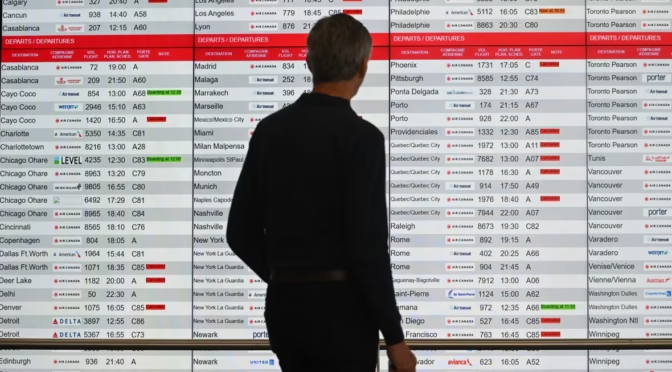
In a dramatic turn of events, the Canadian government intervened less than 12 hours into the strike by 10,000 Air Canada flight attendants on August 16, 2025, ordering them back to work and imposing binding arbitration to resolve the dispute

The sudden escalation followed a strike that grounded nearly 700 flights and affected over 100,000 travelers, in the middle of peak summer travel season

Federal Jobs Minister Patty Hajdu justified the move by citing economic risk, trade pressures, and the need for stability s. However, the Canadian Union of Public Employees (CUPE) promptly condemned the intervention, calling it an overreach that undermines workers’ bargaining power. Union leaders accused the government of “rewarding Air Canada’s refusal to negotiate fairly” and violating the constitutional right to strike 


Legal Context: Right to Strike vs. Government Intervention

Canada’s Supreme Court affirmed in Saskatchewan Federation of Labour v Saskatchewan (2015) that the right to strike is constitutionally protected, integral to collective bargaining Yet, Canadian governments—both federal and provincial—have long held authority to enact back-to-work legislation or force binding arbitration in certain federally regulated sectors, including air travel 

Historically, such measures have been used repeatedly. For instance, during the 2018 Canada Post strikes, rotating strikes were ended by back-to-work legislation  Courts have sometimes challenged these interventions—in 2016, a judge ruled that the federal back-to-work legislation in a 2011 Canada Post dispute violated the Supreme Court’s 2015 recognition of the constitutional right to strike 


Is This a Case of Rights Being Suppressed?

This latest move continues a pattern where economic urgency trumps bargaining autonomy, especially in critical services like transportation. Despite the constitutional affirmation of the right to strike, legislation still permits the government to short-circuit industrial action:

  • Pro: The intervention may be seen as necessary to prevent widespread economic disruption and protect travelers and supply chains.

  • Con: It risks weakening workers’ leverage, particularly among a female-majority workforce (flight attendants), while similar pay increases were recently awarded to a mostly male pilot group—raising concerns about equity and representation 


Sample Social Media Post

Government Forces Air Canada Flight Attendants Back to Work — But at What Cost to Workers’ Rights?

Just hours into a disruptive strike over pay and unpaid duties, the federal government stepped in to force 10,000 flight attendants back to work and dictated binding arbitration. Is this protecting the economy—or undermining the constitutional right to strike?

While economic stability is crucial, especially during peak travel, this pattern of intervention raises troubling questions about whose interests are prioritized. Does this serve Canadians—or silence workers demanding fair treatment?


Bottom Line

  • The right to strike in Canada is constitutionally protected, but back-to-work measures remain lawful, especially in essential sectors like aviation.

  • The government’s swift action in the Air Canada dispute follows historical precedent and legal authority—but not without controversy.

  • The tension between workers’ rights and national interests continues to raise critical debates about fairness, equity, and the future of labor relations in Canada.