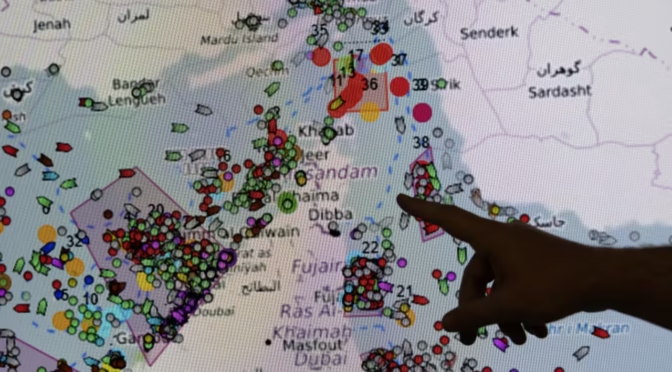
2026 Iran War: Timeline

2026 Iran War: Timeline, Oil Impact, Canada & New Brunswick Effects

Timeline of the 2026 Iran War

February 2026

  • February 28: Large-scale U.S. and Israeli military operations against Iranian targets trigger the current conflict.
  • Iran responds by threatening and then disrupting shipping through the Strait of Hormuz, one of the world’s most important energy chokepoints.

March 2026

  • Oil prices surge above $100 per barrel for the first time in years.
  • Shipping traffic through Hormuz drops dramatically.
  • Governments begin releasing strategic oil reserves.
  • Global stock markets experience sharp volatility.

April 2026

  • Fighting continues at lower intensity.
  • Energy exporters attempt to reroute oil through alternative pipelines and ports.
  • OPEC+ increases production targets to offset lost exports.

May 2026

  • Tensions in the Gulf intensify.
  • Brent crude briefly reaches roughly $113–$126 per barrel during the worst supply fears before retreating.
  • Diplomatic talks begin intermittently but fail to produce a lasting settlement.

Early June 2026

  • Renewed missile, drone, and air-defense activity occurs around Gulf states.
  • The U.S. reports intercepting drones near Hormuz and striking Iranian radar sites.
  • Iran launches missiles toward Gulf countries including Bahrain and Kuwait.
  • Ceasefire negotiations continue but remain fragile.

June 8, 2026

  • Markets remain focused on whether Hormuz can reopen.
  • OPEC+ announces another production increase, but exports remain constrained.
  • Oil prices have eased from their spring peak but remain elevated by historical standards.

Why the Strait of Hormuz Matters

The Strait of Hormuz is a narrow waterway connecting the Persian Gulf to the Gulf of Oman and the Indian Ocean.

Why it is critical

  • Roughly 20% of global oil supplies normally pass through it.
  • Major exporters using Hormuz include:
    • Saudi Arabia
    • Iraq
    • Kuwait
    • Qatar
    • United Arab Emirates
    • Iran

When shipping is disrupted:

  • Oil prices rise.
  • Fuel prices increase worldwide.
  • Inflation pressures grow.
  • Stock markets become more volatile.

Latest Oil Price Analysis

Current Brent crude prices are fluctuating around US$93–99 per barrel, well below the spring peak but still much higher than before the war.

Why prices have fallen from the peak

  1. OPEC+ production increases.

Strategic reserve releases.

Slower global demand growth.

  • Hopes for a negotiated reopening of Hormuz.

Risk going forward

Analysts warn that if disruptions continue through summer and inventories keep shrinking, prices could move back toward US$150 per barrel or higher.


How This Could Affect Canada

Gasoline Prices

Canada imports relatively little Middle Eastern oil directly, but oil is globally priced.

Higher world oil prices can mean:

  • More expensive gasoline.
  • Higher diesel costs.
  • Increased transportation expenses.
  • Rising costs for groceries and consumer goods.

Stock Market Impact

The Canadian stock market often benefits from stronger oil prices because of:

  • Alberta oil producers
  • Pipeline companies
  • Energy services firms

However, high oil prices can also:

  • Increase inflation.
  • Delay interest-rate cuts.
  • Slow economic growth.

What It Means for New Brunswick

Positive Effects

New Brunswick’s refinery sector can benefit from stronger refining margins.

The refinery in Saint John may see improved revenues if refined products remain in strong demand.

Negative Effects

Residents could face:

  • Higher gasoline prices.
  • Increased home-heating costs.
  • More expensive food due to transportation costs.
  • Higher airline and travel costs.

Saint John-Specific Outlook

For Saint John residents, the most noticeable effect is likely to be at:

  • Gas stations
  • Grocery stores
  • Travel and transportation services

If oil remains around US$90–100 per barrel, impacts should be manageable. If prices return above US$120–150, Canadians would likely feel much stronger inflationary pressure.

Bottom Line

The biggest issue in the Iran conflict is no longer the fighting itself—it’s whether shipping through the Strait of Hormuz can fully normalize. As long as uncertainty remains, oil markets, inflation, and economies from the Middle East to Canada and New Brunswick will remain vulnerable to sudden price spikes and market volatility.
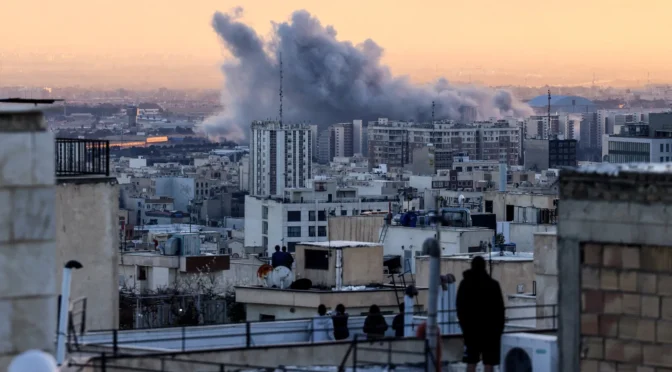
Iran War Update — June 7, 2026

Iran War Update — June 7, 2026

Recent developments indicate that the conflict involving the United States, Iran, Israel, and Iran-backed groups remains highly volatile despite ongoing diplomatic efforts.

Key Events Today

  • The U.S. military reportedly intercepted Iranian drones headed toward the Strait of Hormuz and carried out retaliatory strikes against Iranian radar installations after renewed attacks in the Gulf region.

Iran launched missile and drone attacks toward Bahrain and Kuwait in recent days, prompting air-defense responses across the Gulf. These exchanges have complicated ongoing ceasefire negotiations between Washington and Tehran.

Israel conducted airstrikes in southern Beirut after Hezbollah launched attacks toward northern Israel. Iranian officials have warned of a possible response, raising concerns about a wider regional escalation.

Peace Talks

  • U.S. and Iranian negotiators continue discussing a potential agreement that would help reopen the Strait of Hormuz and reduce military activity in the region.
  • However, disagreements over Iran’s nuclear program, sanctions, and fighting involving Hezbollah in Lebanon remain major obstacles.

Economic Impact

  • Gulf stock markets fell on Sunday as investors reacted to the latest military exchanges.
  • Energy markets remain sensitive because the Strait of Hormuz is one of the world’s most important oil shipping routes.

Current Assessment

The conflict is not currently at full-scale regional war levels, but the situation remains dangerous. Military exchanges continue, diplomatic negotiations are ongoing, and any major attack involving Iran, Israel, Hezbollah, or U.S. forces could quickly escalate tensions.

This Week in New Brunswick History

This Week in New Brunswick History

June 7–14

June 7, 1704

During Queen Anne’s War, New England forces under Benjamin Church raided the Passamaquoddy region near present-day St. Stephen. The event was part of the ongoing struggle between French Acadian settlements, Indigenous allies, and British colonial forces.

June 8, 1866

News spread through New Brunswick and the Maritimes as colonial authorities monitored the aftermath of the Fenian incursions into Canada. The raids heightened concerns about border security and helped strengthen support for Confederation.

June 9

For much of the 1800s, early June marked the peak of spring river travel on the Wolastoq (Saint John River). Timber drives, steamboats, and trading vessels were crucial to the province’s economy and settlement patterns.

June 10

The shipbuilding era was flourishing in many New Brunswick communities during the 19th century. Ports such as Saint John and communities along the Miramichi River were among the most active wooden shipbuilding centres in British North America.

June 11

Summer fishing seasons were underway in the Bay of Fundy and Gulf of St. Lawrence. Fishing, shipbuilding, and forestry formed the backbone of New Brunswick’s economy for generations.

June 12

This period reminds us of the thousands of years of history of the province’s Indigenous peoples, including the Mi’kmaq, Wolastoqey, and Passamaquoddy, whose presence in the region long predates European settlement.

June 13

Throughout the 1800s, church picnics, agricultural fairs, and community gatherings became common in June as rural communities celebrated the arrival of summer and supported local institutions.

June 14

As mid-June approached, New Brunswick’s ports entered one of their busiest periods of the year. Coastal trade, immigration, fishing fleets, and passenger steamships increased significantly with warmer weather.

Beginner Piano Lesson #2

Beginner Piano Lesson #2

(Building on Lesson #1: finding the keys and basic finger placement)

Review

Before starting, find Middle C on your piano or keyboard.

Place your fingers:

Right Hand

  • Thumb (1) = C
  • Index (2) = D
  • Middle (3) = E
  • Ring (4) = F
  • Pinky (5) = G

Left Hand

  • Pinky (5) = C
  • Ring (4) = D
  • Middle (3) = E
  • Index (2) = F
  • Thumb (1) = G

Learn the Quarter Note

A quarter note (♩) gets 1 beat.

Count:
1 – 2 – 3 – 4

Play one key for each count.

Example:

C – D – E – F

Count:

1 – 2 – 3 – 4


Right-Hand Exercise

Play slowly:

C – D – E – F – G

Then back down:

G – F – E – D – C

Repeat 5 times.

Count steadily:

1 – 2 – 3 – 4


First Simple Melody

Play:

C – C – G – G

A – A – G

F – F – E – E

D – D – C

You may recognize this as the beginning of Twinkle, Twinkle, Little Star.

Play slowly and count each note.


Rhythm Practice

Clap this rhythm:

♩ ♩ ♩ ♩

Then:

♩ ♩ ♫♫ ♩

Count:

1 2 3-and-4

Learning rhythm is just as important as learning notes.


Homework

Practice for 10–15 minutes daily:

  1. C-D-E-F-G up and down.
  2. Twinkle, Twinkle melody.
  3. Count out loud while playing.
  4. Keep fingers curved and relaxed.

Piano Tip

Play slowly enough that you never make a mistake. Speed comes naturally after accuracy.

Lesson #3 will introduce the C Major Scale and your first chords. 🎹