
🇮🇷 Iran Update — August 17, 2026
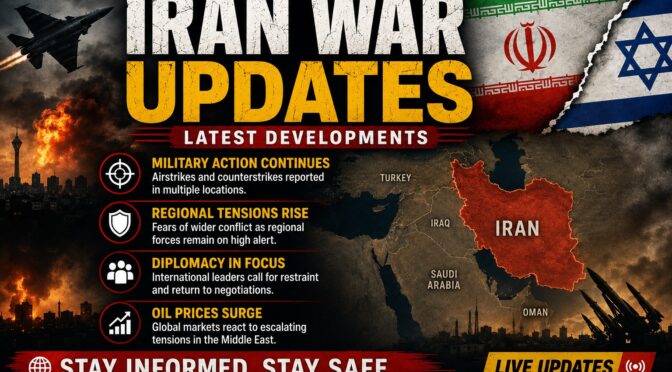
The Iran situation is becoming more dangerous again, with the U.S.-Iran diplomatic track effectively stalled.
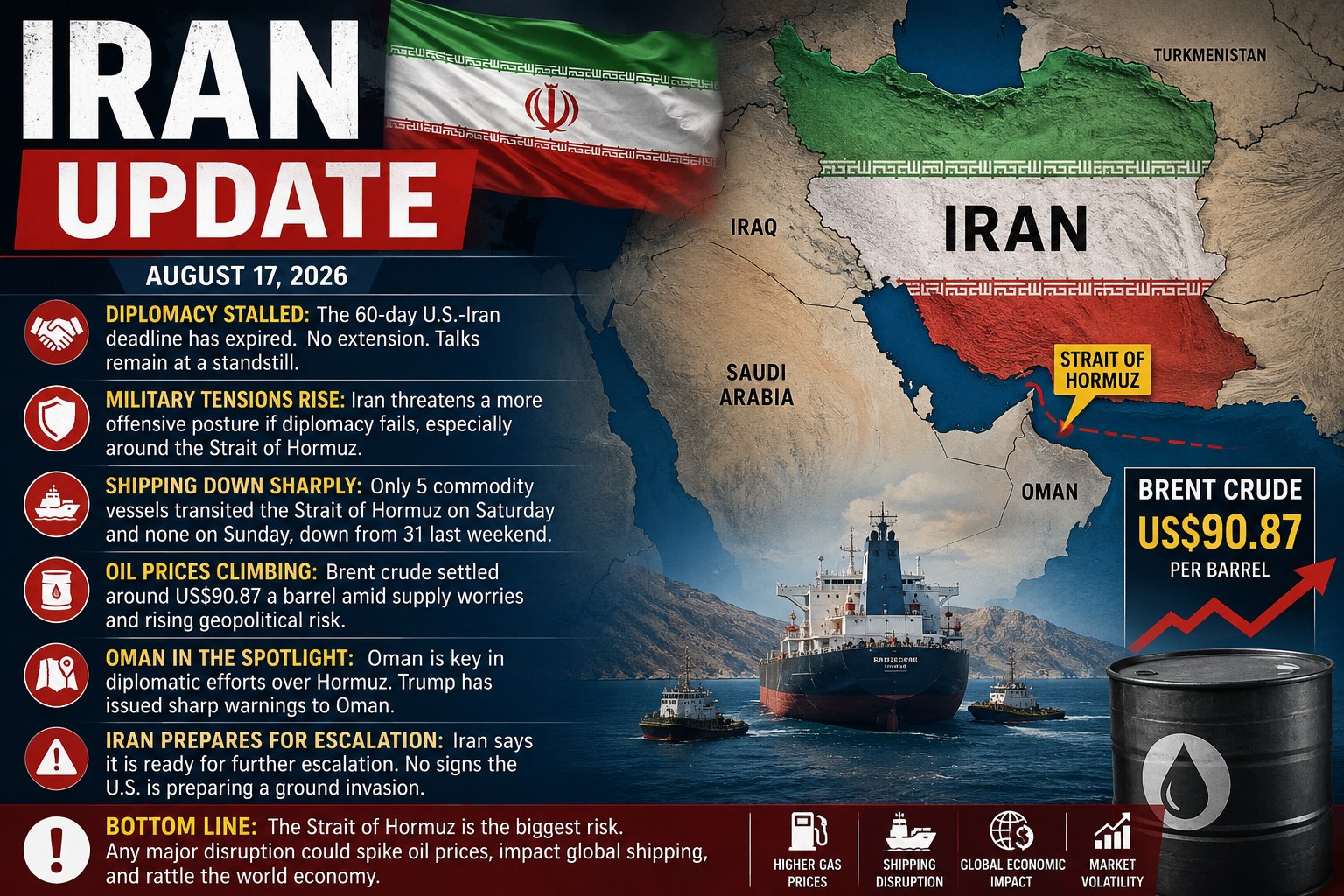
- 60-day U.S.-Iran deadline has expired. The June memorandum aimed at stopping the fighting and reopening the Strait of Hormuz has not produced a lasting settlement. Both sides accuse the other of violating the agreement.
Trump says there will be no extension of the interim arrangement and is demanding that Iran make major concessions, particularly concerning its nuclear program.
Iran is threatening a more offensive military posture if diplomacy fails, particularly around the Strait of Hormuz. Iranian officials say the waterway will not fully reopen without U.S. concessions.
Hormuz shipping has fallen sharply. Only five commodity vessels reportedly transited on Saturday and none on Sunday, compared with 31 the previous weekend.
Oil prices are responding. Brent crude settled around US$90.87 a barrel, with fears that further disruption could push prices higher.
Oman has become a key diplomatic flashpoint. Oman has been involved in efforts to negotiate arrangements concerning Hormuz, while Trump has sharply criticized and threatened Oman if it obstructs U.S. objectives.
Iran says it is prepared for further escalation, while there is currently no clear indication that the U.S. is preparing a ground invasion of Iran.
⚠️ Bottom line
The biggest immediate concern is the Strait of Hormuz. A prolonged shutdown or major military escalation there could affect oil prices, gasoline prices, shipping and the wider global economy.
For Canada, the effects would likely be felt primarily through higher gasoline and energy costs and increased global economic uncertainty, rather than direct military involvement.