
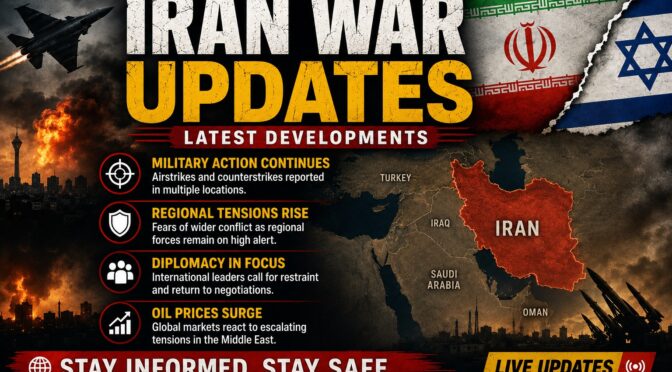
Here are the latest major developments in the ongoing Iran war (as of today):
🔴 Military & conflict situation
- A fragile ceasefire is in place, but it’s very unstable. The U.S. has paused attacks while waiting for negotiations, but tensions remain high.
Despite that pause, Iran seized two commercial ships in the Strait of Hormuz, a critical global oil route—seen as a major escalation.
The U.S. is still enforcing a naval blockade, which Iran considers an act of war.
Planned peace talks (mediated by Pakistan) have stalled or collapsed, with both sides blaming each other.
👉 Bottom line: Even with a ceasefire, the situation is tense and could restart into full fighting quickly.
⚠️ Rising global tensions
- Leaders on both sides are making strong, aggressive statements, and trust is very low.
Iran is warning it may break the blockade by force if demands aren’t met.
There are signs both sides are preparing for possible renewed conflict rather than peace.
🛢️ Massive impact on oil & energy
- The Strait of Hormuz disruption has cut ~13 million barrels/day of oil supply, a huge global shock.
Oil demand and supply are both unstable, causing price spikes and shortages worldwide.
Europe and Asia are especially affected, with fuel shortages and high prices already hitting economies.
🌍 Economic effects worldwide
- Governments are stepping in:
- EU plans to cut electricity taxes and support households.
Greece announced a €500M aid package to offset rising energy costs.
Inflation is rising in multiple countries due to fuel and transport costs.
Airlines and supply chains may soon face fuel shortages and disruptions.
🧭 Big picture
- The war began in late February 2026 with U.S. and Israeli strikes on Iran.
- Right now, the conflict is in a pause-but-not-peace phase:
- No full-scale fighting at the moment
- But no real agreement either
- The biggest risk is that one incident (like ship seizures or blockade clashes) could restart the war quickly.