
Category Archives: The World

Middle East Conflict Quiz

🌍 Middle East Conflict Quiz

Multiple Choice

1. The recent major escalation in conflict began after which event in October 2023?
A. A peace agreement
B. A large-scale attack by Hamas on Israel
C. A UN summit
D. A natural disaster


2. Which group controls the Gaza Strip?
A. Hezbollah
B. Hamas
C. ISIS
D. Taliban


3. Which country is in conflict with Hamas?
A. Egypt
B. Israel
C. Jordan
D. Turkey


4. Hezbollah is primarily based in which country?
A. Syria
B. Iraq
C. Lebanon
D. Iran


5. Which global organization often calls for ceasefires and humanitarian aid?
A. NATO
B. United Nations
C. FIFA
D. OPEC


True or False

6. The conflict only affects military targets and not civilians.
True / False


7. Humanitarian aid includes food, water, and medical supplies.
True / False


8. Multiple countries and groups are involved directly or indirectly in the conflict.
True / False


Short Answer

9. What is a “ceasefire”?
(Write a brief definition)


10. Name one country in the Middle East that is not directly involved in the conflict but is affected by it.


Bonus Question

11. Why is the Middle East considered important globally?
(Think about geography, resources, and history)


✅ Answer Key

  1. B

  2. B

  3. B

  4. C

  5. B

  6. False

  7. True

  8. True

  9. A temporary stop in fighting

  10. Answers may vary (e.g., Jordan, Saudi Arabia, Egypt)

  11. Answers may include oil resources, location between continents, and historical/religious significance

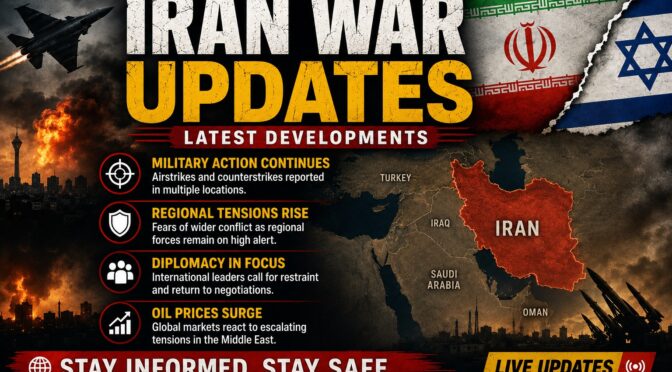
2026 Iran conflict

Here’s a clear breakdown of which countries are currently combatants (actively fighting or directly involved in military actions) versus those that are affected by attacks or impacts in the ongoing 2026 Iran conflict (as it stands right now — this situation is rapidly evolving).


🔥 Direct Combatant Countries

These countries are actively fighting, attacking, or part of major military operations:

🇮🇷 Iran

  • Central party to the conflict — attacked by U.S. and Israel, firing missiles and drones in response.

🇺🇸 United States

  • Leading coordinated strikes with Israel on Iran. U.S. military bases have been targeted by Iranian attacks.

🇮🇱 Israel

  • Conducting large-scale air and missile strikes on Iranian targets and defending against Iranian missiles.

🇱🇧 Lebanon

  • Iran-aligned group Hezbollah launched attacks into Israel; Israel has responded with heavy strikes inside Lebanon.


⚠️ Countries Affected by Attacks or Military Involvement (Not Main Combatants)

These countries have been hit by missiles, drones, or are directly impacted by the conflict spread — civilians and military assets have been targeted:

🇦🇪 United Arab Emirates (UAE)

  • Iranian strikes hit major cities and infrastructure, causing casualties and damage.

🇰🇼 Kuwait

  • Sites and areas targeted by Iranian attacks, including anti-air engagements.

🇶🇦 Qatar

  • Attacked with drones/missiles, part of wider Gulf impact.

🇧🇭 Bahrain

  • Iranian missiles/drones have struck territory; U.S. naval base in Manama was among targets.

🇸🇦 Saudi Arabia

  • Iranian strikes reported (e.g., against infrastructure like oil facilities), even if casualties are low so far.

🇯🇴 Jordan

  • Air defense engaged, attacks reported (missiles intercepted).

🇮🇶 Iraq

  • U.S. bases hit by Iranian-aligned militias, reflecting indirect involvement.

🇴🇲 Oman (maritime/indirect impact)

  • Iranian drones/missiles affected ports and waters; shipping risks elevated.

🇨🇾 Cyprus

  • Iranian or allied drones struck British facilities in Cyprus, expanding geographical impact.


📌 Summary by Role

⚔️ Main Combatants

  • Iran 🇮🇷

  • United States 🇺🇸

  • Israel 🇮🇱

  • Lebanon (via Hezbollah) 🇱🇧

📌 Affected or Involved Countries

  • United Arab Emirates 🇦🇪

  • Kuwait 🇰🇼

  • Qatar 🇶🇦

  • Bahrain 🇧🇭

  • Saudi Arabia 🇸🇦

  • Jordan 🇯🇴

  • Iraq 🇮🇶

  • Oman 🇴🇲

  • Cyprus 🇨🇾


📊 Total Countries Impacted

Counting both direct engagement and affected parties, at least 13 countries are currently involved or impacted in this conflict.

Iran today

Here are the latest verified updates on the protests in Iran (mid-January 2026) — covering the situation on the ground, casualties, government response, internet and communications status, and international reactions:

Latest Iran Protests & Government Crackdown (January 2026)
At least 2,571 killed in Iran's protests, Trump says 'help is on the way'

Reuters

Today
Hundreds of gunshot eye injuries found in one Iranian hospital amid brutal crackdown on protests

The Guardian

Today
The Latest: Iranian judge signals trials and executions as activists say death toll surpasses 2,500

AP News

Today
Iran protests live: Military on high alert as US ramps up attack threats

Al Jazeera

Today
Iran latest: US personnel pulling out of key Middle East base - as Iran vows revenge for any attacks

Sky News

Today
 

🔥 Current Situation in Iran

1. Protests remain widespread and intense
Mass anti-government demonstrations that began in late December 2025 over deep economic woes (inflation, unemployment, currency collapse) have expanded into broader opposition to theocratic rule, with protests reported in hundreds of cities and locations nationwide.

2. Severe government crackdown continues
Iran’s security forces — including the IRGC and Basij militias — are using live ammunition, shotguns, tear gas, and forceful arrests against demonstrators. Hospitals are treating large numbers of serious injuries, including hundreds of gunshot wounds to eyes and heads, suggesting highly aggressive crowd-control tactics. 3. Internet and communication disruptions
A near-total national internet blackout was imposed beginning 8 January 2026 to block information flow and protest coordination — although some phone calls abroad have been partially restored recently.


🧑‍🤝‍🧑 Casualties, Arrests & Death Sentences

4. Death toll estimates have soared

  • According to Iranian activist groups, the death toll has reached at least ~2,500–2,570 people — making this one of the deadliest protest crackdowns in decades.

Official Iranian acknowledgement has cited around 2,000 deaths, but activist sources and external estimates suggest numbers could be even higher amid ongoing violence and communication blackouts.

5. Mass arrests and possible executions

  • Rights groups report over ~18,000 people detained since late December, including protesters, bystanders, and critics.

Iranian judiciary officials have pledged fast-track trials and executions for many detained demonstrators, raising grave human rights concerns.

6. High-profile sentences

  • Erfan Soltani, a 26-year-old protester, was sentenced to death on charges of “waging war against God” (moharebeh) — symbolizing the government’s harsh legal stance against demonstrators.


🛡️ Government Messaging & Tactics

7. Iranian government response

  • Officials claim the situation is “under control” and attribute unrest to foreign influence and “terrorist operatives,” while security forces maintain a heavy presence in major cities.

Concrete barriers and increased fortifications have been reported around key urban centers.


🌍 International Reactions & Risks

8. U.S. and global involvement

  • U.S. President Donald Trump has expressed support for protesters, urged them to continue, warned of “strong action,” and cancelled diplomatic engagements with Iran’s leadership.

Trump has also suggested possible economic measures (e.g., import tariffs) and warned Americans to leave Iran due to instability and potential conflict.

9. Strategic tensions rising

  • Iran has threatened retaliation if the U.S. takes military action, and there are reports of U.S. personnel adjustments at strategic bases in the region amid heightened tensions.

Other nations (e.g., India) have issued travel advisories for their citizens in Iran.


📝 Summary Snapshot

Aspect Status (Mid-Jan 2026)
Protests Nationwide, ongoing in 200+ cities
Casualties ~2,500+ killed; thousands more wounded
Arrests ~18,000+ detained
Government crackdown Heavy force, live fire, trials/executions
Internet/communication Near-total blackout, partially eased
International tension U.S. and Iran exchanges intensify

⚠️ Context

This protest wave — which began over economic grievances — has evolved into a larger challenge to Iran’s political system, attracting international condemnation and escalating diplomatic and strategic tensions. Independent reporting remains difficult due to official communications blackouts.

Russia Launches Mass Drone Attacks

Tensions Escalate as Russia Launches Mass Drone Attacks; NATO Responds to Violations in Poland


What Happened

  • On September 7, 2025, Russia carried out its most massive aerial assault since the full-scale invasion began. The attack involved over 800 drones and multiple missiles. Key among the targets was a government building in Kyiv, which sustained damage for the first time. There were civilian casualties: at least 3-4 killed (including a mother and infant), dozens wounded. The Guardian+3Financial Times+3The Washington Post+3

  • In response, Ukraine’s air defenses intercepted most of the threats, though the scale of the attack exposed strains in the system. Financial Times+1

  • A few days later, Poland, a NATO member, shot down 19 Russian drones that had entered its airspace during one of these assaults. This is widely seen as the first time a NATO country has engaged Russian drones during the war. Reuters+2The Washington Post+2

  • Poland invoked Article 4 of the NATO Treaty, demanding consultations with allies, signaling this is viewed not as an accident but as a deliberate escalation. Reuters+2The Washington Post+2


Implications

  • Risk of wider escalation: With drones being shot down over NATO airspace, questions arise about how far Russia might push to test NATO’s responses. The Washington Post+2Reuters+2

  • Strain on air defence systems: Ukraine’s already stretched air defence was heavily challenged—this suggests upgrades, more support, or rethinking strategy is urgent. Financial Times+1

  • Civilian harm and morale: Attacks that hit government buildings or cause civilian casualties fuel international condemnation and put pressure on Ukraine’s allies to respond more forcefully. AP News+1

  • Diplomatic pressure: Ukraine, Poland, and NATO are pushing for more coordinated defense – possibly a joint European air defense system. Sanctions on Russia are being revisited as potential tools. The Guardian+1


Questions That Remain

  • Did Russia intend to cross into NATO airspace deliberately or was this navigational/drone control error? Russia claims the incursions were unintentional. The Guardian+2Reuters+2

  • How will NATO respond in the long term? More military actions, stronger defense postures, or tougher sanctions are possibilities.

  • Can Ukraine scale up its defenses in time for potential new large-scale drone/missile attacks, especially as winter approaches (which often brings more vulnerability in energy infrastructure)?


Takeaway

The war continues to escalate not just on Ukraine’s frontlines but in diplomatic, military, and strategic dimensions. Russia’s recent mass drone and missile attacks, plus airspace violations over NATO territory, are raising the stakes. What used to be mostly contained to Ukrainian territory is now increasingly involving NATO borders, weaponizing drones, and prompting defense responses from allies. The coming weeks may see either a further ramping up of defense and deterrence efforts or, potentially, miscalculations that could provoke broader conflict.

The United Nations: A Toothless Giant?


Another conflict the UN can’t control: Cambodia and Thailand are once again locked in a border dispute, echoing past clashes that flare up, die down, and flare up again — all while the UN watches, issues statements, and does next to nothing meaningful to stop it.

Sound familiar? Look at Israel and Hamas — decades of resolutions, condemnations, and “peace talks,” but the violence keeps cycling back, worse each time. Russia and Ukraine? The UN’s strongest words and humanitarian appeals have done little to stop a full-scale invasion and the brutal cost in human lives.

This is an organization that was designed to prevent exactly this: wars between nations, unrestrained invasions, civilian suffering on massive scales. Yet time after time, the UN proves it’s little more than a stage for big speeches and watered-down resolutions that the world’s biggest powers can veto at will.

Maybe it’s time to admit that the UN, in its current form, is not the guardian of peace it was meant to be — just a bureaucracy where conflicts are “managed” with paperwork while real people pay the price.