Category Archives: Politics

Trump’s Rhetoric : Too Little, Too Reckless

Headline: Trump’s Rhetoric After Charlie Kirk’s Assassination: Too Little, Too Reckless


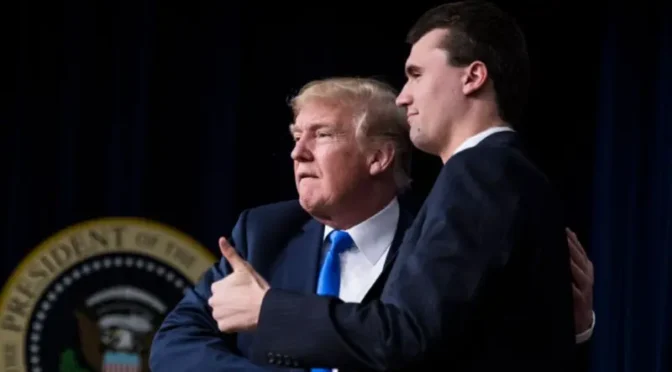
The recent killing of Charlie Kirk, a high-profile conservative activist, has left the nation reeling. It was a moment that demanded sobriety, unity, and thoughtful leadership. Instead, much of what followed – especially from Donald Trump – exposed just how far we have drifted from those things.

Here are some reflections on why Trump’s response has been so problematic, even “idiotic,” depending on how one feels about the urgency of the moment.


What Trump Did Say

  1. He condemned “political violence” and the demonization of conservative voices, attributing blame to rhetoric coming from the “radical left.” The Guardian+1

  2. He called for “beating the hell” out of “radical left lunatics.” Politico

  3. He expressed empathy toward Kirk’s family, called Kirk “a great guy from top to bottom,” and pledged to award him the Medal of Freedom posthumously. People.com+2Politico+2


What’s So Troubling (Why It Feels Idiotic)

When people call his response “idiotic,” they usually mean one or more of the following:

  • Escalation over de-escalation: Killed or shot, this is precisely the moment to dial down inflammatory language. But phrases like “beat the hell out of radical left lunatics” do not calm things down. They stoke further division and can be seen as incitement, even if not intended.

  • Vague blame, zero accountability: Trump blames “the radical left” broadly. But there is no evidence (at least so far) that a specific organized “left” group planned or carried out the attack. In times like this, it matters what you know and what you assert. Blaming vague forces without evidence can be misleading and ethically dangerous.

  • Mixed messages about violence: Trump also said people should respond nonviolently. But juxtaposed with his calls to “beat … radical left lunatics,” that seems contradictory. On one hand, “we should condemn violence”; on the other, we’re urged to “beat” people who hold certain political views. That’s dangerous territory, because it risks justifying violence in the name of politics.

  • Moral responsibility of leadership: Someone in leadership (especially a former president who still wields influence) has more to lose by reckless rhetoric. Words matter. They shape culture, they signal what’s acceptable. If you cast a whole group as “lunatics” or “radical” without clarity, you risk legitimizing harassment, vigilantism, or violence by those who take you literally.

  • Missed opportunity for real unity: This was a chance to pause, reflect, build bridges—even just modestly. Offer condolences, call for better discourse, commission investigations, demand that violent speech be reined in on all sides. Instead, Trump took the path of sharpening partisan edges, as though the political fight must continue, even in the shadow of murder.


Why Some Will Defend Trump’s Approach

To be fair, it’s possible to see why he gave the response he did:

  • His base expects strong, aggressive rhetoric. “Standing firm” is seen by many as strength.

  • There is a real concern about how political rhetoric contributes to violence. Trump may believe that painting certain speech or groups as dangerous is necessary to mobilize.

But even granting those, there is a line between mobilizing political will and fueling further violence.


What Should Have Been Done

If one hopes for a better standard of leadership, here’s what a more responsible response might include:

  • Clear condemnation of violence and calls for patience while the facts are investigated.

  • Restraint in language: avoid demonizing language toward broad groups.

  • Acknowledgment that many have contributed to polarization—not just one side.

  • Concrete steps: for example, asking for reforms to how political speech is moderated or how threats are handled; supporting civil society efforts to bridge divides.

  • Focus on victims: empathizing with the family, showing genuine concern rather than turning the moment immediately into political ammunition.


Final Thought

The tragedy of Charlie Kirk’s death deserves more than political posturing. When a public figure is murdered, that should be a moment where rhetoric falls away and morality steps forward. Trump’s response fails that test. It doesn’t just wound; it risks making wounds worse by giving license to more extremes.

Let’s hope whatever comes next is grounded in respect, truth, and responsibility—not hollow soundbites.
The Damage Trump Is Doing

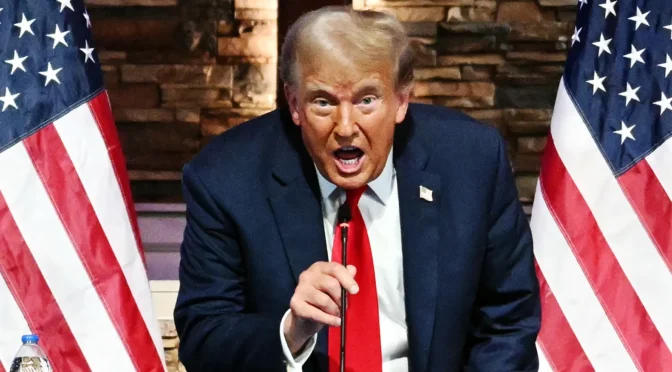
Why Many Americans Still Don’t See the Damage Trump Is Doing—Backed by Data and Global Voices

When Americans overlook the harm caused by Donald Trump—both at home and abroad—the consequences may seem distant. But global opinion and international leadership reactions tell a much clearer story.


1. Global Trust in U.S. Leadership: A Steep Decline

Pew Research Center (Jan–Apr 2025) surveyed over 28,000 people in 24 countries:

  • Only 34% expressed some confidence in Trump’s leadership on world affairs; a staggering 62% said they had little or no confidence Pew Research CenterThe Guardian.

  • Descriptors for Trump skewed overwhelmingly negative: around 80% called him “arrogant”, and about two-thirds deemed him “dangerous” The Guardian.

  • Favorability toward the U.S. also dropped in 15 of 24 nations, with especially large declines in Mexico, Sweden, Poland, and Canada Pew Research CenterThe Guardian.

  • Views on U.S. democracy were split: a median of 50% said it works well, while 46% said it works poorly Pew Research Center.

Gallup data offers additional context:

  • As of the latest measure, 41% globally approve of U.S. leadership—unchanged but modest Gallup.com.

  • Trust must be built—not assumed. Twenty years ago, under Obama, approval peaked at 49% Gallup.com.

Lowy Institute (2025) tracked global trust in the U.S. to “act responsibly”:

  • In 2025, trust fell sharply: only 27% somewhat trusted the U.S., down from higher rates in preceding years poll.lowyinstitute.org.


2. Direct Voices from Around the World

Here are some pointed responses from world leaders reacting to Trump’s recent policies—especially tariffs and trade moves:

France – President Emmanuel Macron strongly condemned new tariffs as “brutal and unfounded.” He warned they would make Americans “poorer and weaker” and proposed pausing European investments in the U.S. The GuardianeuronewsRTL Today.

European Commission President Ursula von der Leyen called the tariff announcement a “major blow to the world economy”, warning of dire global consequences and preparing a first package of countermeasures TimesLIVEThe GuardianReuters.

German Chancellor Olaf Scholz labeled the move “fundamentally wrong” and an attack on the global trade system—an outcome rooted in American achievements. He stressed Europe’s united and proportionate response TimesLIVE.

Poland’s Prime Minister Donald Tusk urged Europe to present a “clear, friendly, but firm” and united stance while maintaining good relations with the U.S. Reddit+1.

EU foreign policy chief Kaja Kallas warned: “If we start a trade war… the one laughing on the side is China.” She emphasized mutual interdependence: “We need America, and America needs us as well.” Reddit.

Spain’s Prime Minister Pedro Sánchez dismissed Trump’s unilateral demands, urging “solidarity and consistency” among Western democracies—and warning against ceding ground to authoritarian rivals The Guardian.

Australia’s PM Anthony Albanese described his recent call with Trump as “warm and constructive”, focused on collaboration over critical minerals and shared security—reflecting cautious engagement amid ongoing tensions Reuters.


3. Why Americans Still Miss This

Media silos and echo chambers obscure perceptions of long-term consequences.

Fatigue from relentless headlines makes erosion of institutions and credibility feel normal.

Global shifts don’t grab headlines in the U.S. – damage accumulates quietly until overnight it feels too late to reverse.


Final Word

U.S. soft power, once an enduring foundation of global leadership, continues to erode—confirmed by Gallup, Pew, and other international metrics. At the same time, global leaders across Europe, Asia, and beyond are issuing clear warnings: Trump’s policies risk isolating the U.S., undermining democratic cohesion, and laying the groundwork for geopolitical instability.

The cost isn’t hypothetical—and it’s not just global. It’s real, measured, and unfolding.

Tariffs Are Trump’s Toxic Ex

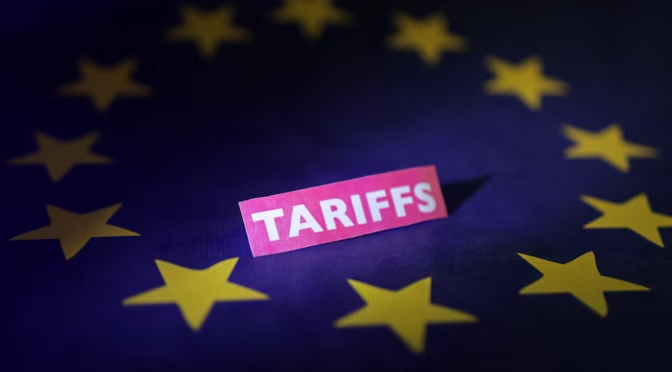
Tariffs Are Trump’s Toxic Ex—And He Still Can’t Quit Them

Trump’s obsession with tariffs is like that one ex who swears they’re the best thing that ever happened to you—but all they did was wreck your finances and ghost you when things got tough.

Remember when he slapped tariffs on everything that moved, promising it would punish China and revive U.S. industry? Fast-forward, and we got rising prices, pissed-off farmers, supply chain chaos, and a trade war that hurt us more than them. Spoiler: China is not paying  the bill—we are

And now, instead of learning from the mess, he’s back on track preaching the same tired gospel like it’s some kind of economic miracle. It’s not policy—it’s cosplay economics. And everyday Americans are still paying the price for his trade war fantasy.

Tariffs didn’t make America great again—they made groceries more expensive, exports harder, and global trust in the U.S. flinch. If this is the plan for 2025, brace yourself. Round two might be even dumber than the first.

Massive Crowds, Record Advance Voting

Massive Crowds, Record Advance Voting — Is a Conservative Majority on the Horizon?

The signs are getting harder to ignore.

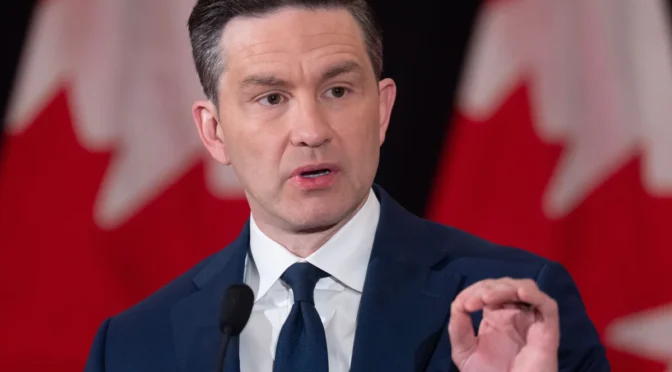
Conservative leader  is drawing massive crowds at political events across the country — crowds that dwarf anything seen in recent elections. People are showing up in droves, energized and ready for change.

Add to that a stunning advance voting turnout: over seven million Canadians have already cast their ballots. That kind of early engagement often signals one thing — a motivated base and a strong desire for something new.

Are we witnessing the beginning of a Conservative majority? With this kind of momentum, it’s starting to look like a real possibility.

Change is in the air. Are you feeling it too?