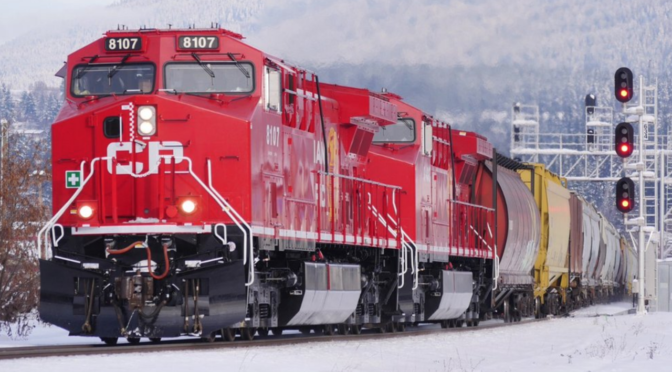
The rail industry plays a pivotal role in the Canadian economy, serving as the backbone for transporting goods across the country. As we look at two of the largest rail companies in Canada—CN Rail and CPKC Rail—a pressing question arises: Should these companies be designated as essential services?
The Role of CN Rail and CPKC Rail
CN Rail (Canadian National Railway) and CPKC Rail (Canadian Pacific Kansas City) are vital to the transportation infrastructure. They connect Canada’s vast geography, moving everything from raw materials like grain and lumber to finished products and energy resources. The reach of these rail networks is extensive, impacting not only Canadian markets but also international trade, given their links to ports and the U.S. rail system.
Why Consider Essential Service Designation?
- Economic Impact: The smooth operation of CN and CPKC Rail is critical to the Canadian economy. Disruptions—whether from strikes, natural disasters, or other causes—can lead to significant economic losses. Designating them as essential services could mitigate such risks, ensuring continuity even during challenging times.
- Supply Chain Stability: In today’s interconnected world, supply chain disruptions can have ripple effects across industries. The COVID-19 pandemic highlighted the vulnerability of global supply chains, and rail transport is a key component in maintaining stability. An essential service designation could protect this crucial link.
- Public Interest: Rail services are not just about moving goods; they also impact public services. For instance, the transportation of essential items like food, medical supplies, and energy products is reliant on an uninterrupted rail network. Ensuring these services remain operational, even during labor disputes, could be seen as serving the public good.
Potential Drawbacks
However, designating CN and CPKC Rail as essential services is not without its challenges. Labor unions might argue that such a designation could undermine workers’ rights to strike and negotiate better working conditions. There’s also the concern of setting a precedent that might lead to other industries being similarly designated, potentially eroding labor rights more broadly.
Conclusion
The debate over whether CN Rail and CPKC Rail should be designated as essential services touches on crucial aspects of economic stability, public interest, and labor rights. While the benefits of such a designation could be substantial in terms of ensuring uninterrupted service and economic resilience, it’s important to weigh these against the potential impacts on workers’ rights. A balanced approach, perhaps one that includes strong safeguards for labor negotiations, might offer a way forward that protects both the economy and the rights of workers.
What do you think? Should CN Rail and CPKC Rail be deemed essential services, or would this be a step too far? Let’s discuss.