đź”´ Current Situation
- The war—mainly involving Iran, the U.S., and Israel—has been ongoing since late February 2026.
Fighting is still happening, even though leaders are talking about ceasefires and deals.
- The conflict is largely centered around the Strait of Hormuz, a critical global oil shipping route.
Military & Conflict Updates
- Missile and drone attacks continue across the region, including strikes reported on the UAE.
The U.S. has carried out strikes and enforced a naval blockade, targeting ships and Iranian positions.
Iran still has a large portion of its missile and drone capability intact, meaning it can keep fighting for months.
Naval clashes and “defensive strikes” are still happening despite talk of a ceasefire.
Peace Talks (Important Development)
- New today: Iran has officially responded to a U.S. peace proposal.
- Talks are aiming for a temporary agreement to:
- Stop fighting
- Reopen shipping routes
- Longer-term issues (like Iran’s nuclear program) are still unresolved.
Global Impact
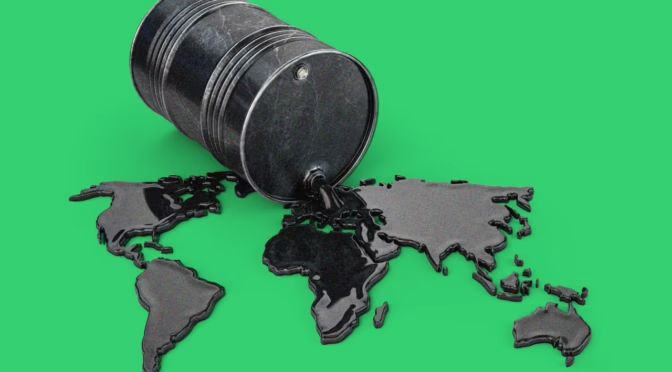
- The war is disrupting global oil supply, since the Strait of Hormuz is partially blocked.
- Oil prices and shipping costs have surged worldwide.
- Gulf countries’ economies are being hit hard, especially those dependent on oil exports.
Hundreds of ships and thousands of crew have been stuck in the region.
International Involvement
- Countries like the UK and France are sending naval forces to protect shipping routes.
- Other nations are trying to mediate peace, including Pakistan.
Big Picture
- The war is currently at a stalemate—neither side has clearly won.
There’s a real chance of a temporary ceasefire, but:
- Fighting hasn’t stopped
- Tensions remain extremely high