Highest number of people of Irish descent per capita.

Saint John, New Brunswick, is often noted for having a significant Irish community. The city has deep historical ties to Ireland, especially due to the large number of Irish immigrants who arrived in the 19th century during the Great Famine. It’s estimated that a large percentage of the city’s population has Irish roots, making it  the place in Canada with the highest number of people of Irish descent per capita.

St Patricks Day Beer Images – Browse 110,664 Stock Photos ...

This Irish influence is still visible today in local culture, with events like the annual Saint Patrick’s Day celebrations being a big deal in the city.

St. Patrick's Day

Ides of March

The Ides of March refers to March 15 in the ancient Roman calendar. It’s most famous for the assassination of Julius Caesar in 44 BC.

What happened

On March 15, 44 BC, Caesar was stabbed to death by a group of Roman senators inside the Theatre of Pompey. The conspirators feared that Caesar was becoming too powerful and might end the Roman Republic by turning it into a monarchy.

Key conspirators included:

  • Marcus Junius Brutus

  • Gaius Cassius Longinus

  • Dozens of other senators.

Why it’s famous

  • It marked a major turning point that eventually led to the fall of the Roman Republic and the rise of the Roman Empire.

  • It inspired famous lines in William Shakespeare’s play Julius Caesar, including the warning:
    “Beware the Ides of March.”

What “Ides” actually means

In the Roman calendar:

  • Ides was the middle of the month.

  • It fell on the 15th in March, May, July, and October, and the 13th in other months.

✅ Today, “Ides of March” is often used as a phrase meaning a warning about betrayal or impending danger.

This weeks History

Here are notable events in Canadian history connected to March 14 (from different years).

🇨🇦 This Week in Canadian History — March 14

1868 – Birth of Emily Murphy

  • Emily Murphy was born in Cookstown, Ontario.

  • She later became the first female magistrate in Canada and the British Empire and was a leading advocate for women’s rights and legal reform.

1872 – New Premier of Manitoba

  • Henry Joseph Clarke became Premier of Manitoba, replacing Marc‑Amable Girard.

1899 – Birth of a major Canadian business leader

  • K. C. Irving, founder of the Irving business empire in Atlantic Canada, was born.

1916 – Women gain the vote in Saskatchewan

  • Women were granted the right to vote in provincial elections in Saskatchewan, an important milestone in Canadian women’s suffrage.

1923 – First full hockey radio broadcast

  • The world’s first complete play-by-play radio broadcast of a professional hockey game took place in Regina, called by Pete Parker.

1932 – Birth of a famous Indigenous artist

  • Norval Morrisseau was born in Ontario.

  • He later founded the Woodland School of Indigenous art, influencing generations of artists.

2020 – Early COVID-19 impacts in Canada

  • Several provinces reported early cases and restrictions; for example, Prince Edward Island confirmed its first COVID-19 case and major venues began closing.


Quick fact:
March 14 is also known worldwide as “Pi Day” (3.14) in mathematics, though it’s not specifically a Canadian holiday.

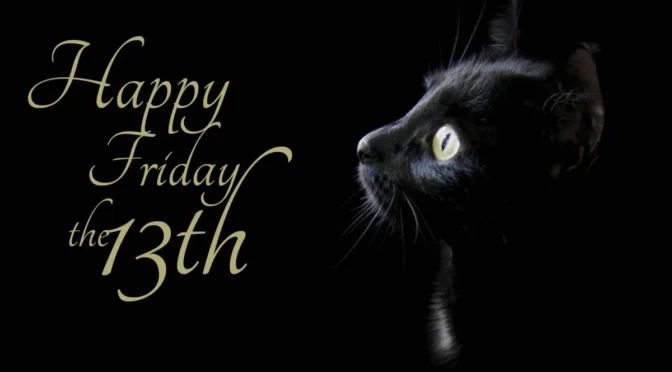
Friday the 13th

Friday the 13th is considered unlucky because two different old superstitions merged: fear of the number 13 and fear of Friday as a day of misfortune. Over time, they combined into one famous belief. Here are the main reasons people give:


1️⃣ The number 13 was already seen as unlucky

In many Western traditions, 12 is viewed as a “complete” number (12 months, 12 zodiac signs, 12 hours on a clock).
Because 13 comes after 12, it was sometimes seen as irregular or disruptive.

There’s also a Christian tradition connected to The Last Supper:

  • There were 13 people at the table.

  • The next day, Jesus Christ was crucified.
    This association helped reinforce the idea that 13 brings bad luck.


2️⃣ Friday historically had negative associations

In medieval Europe, Friday was sometimes seen as unlucky because several religious events were believed to have happened on that day, including the crucifixion of Jesus.

Because of this, people were sometimes wary of:

  • starting journeys

  • beginning important projects

  • holding major events on Fridays.


3️⃣ A historical event that reinforced the myth

A famous story often linked to the superstition is the Arrest of the Knights Templar.

  • On Friday, October 13, 1307, the French king ordered the mass arrest of members of the Knights Templar.

  • Many were imprisoned or executed.

Some historians say this event may have helped strengthen the superstition.


4️⃣ Books and movies made it popular

The superstition became widely known in modern culture thanks to books and films like Friday the 13th, which turned the date into a famous horror theme.


In short:
Friday the 13th is considered unlucky because two old fears—Friday and the number 13—combined over time, and stories, religion, and pop culture made the superstition spread.


Here are 5 weird things some people still do because of the superstition around Friday the 13th 😄


1️⃣ Buildings skip the 13th floor

Many hotels and office buildings don’t label a floor “13.”
Instead they go from 12 → 14.

This happens in many big cities like New York City and Toronto because developers worry that some guests or tenants might avoid the building.


2️⃣ People avoid flying

Some travelers refuse to book flights on Friday the 13th.
A few airlines even notice slightly lower bookings on that date because of superstition.


3️⃣ Hospitals sometimes schedule fewer surgeries

In some places, fewer people schedule elective (non-urgent) surgeries on that day because they think it’s unlucky.

Doctors say there’s no evidence the date affects outcomes—but the belief still affects decisions.


4️⃣ Businesses delay big decisions

Some companies avoid:

  • launching products

  • signing contracts

  • starting construction

on Friday the 13th because of client superstition.


5️⃣ Some people stay home completely

A small number of people have an extreme fear of the date called Paraskevidekatriaphobia.
People with it may avoid:

  • traveling

  • going to school or work

  • doing anything risky that day.


Fun fact: Economists estimate superstition around Friday the 13th can cause millions of dollars in lost business because people cancel trips or postpone plans.