Super Bowl Predictons

As of today, February 7, 2026, the Seattle Seahawks are favored to win Super Bowl LX against the New England Patriots. The game is scheduled for Sunday, February 8, at Levi’s Stadium in Santa Clara, California, with kickoff at 6:30 p.m. ET.

šŸˆ Expert Predictions

Many analysts are leaning toward the Seahawks:

  • Will Hill predicts a 27–17 Seahawks victory, citing Seattle’s superior talent across the board and expecting quarterback Sam Darnold to earn MVP honors.

Chris Fallica forecasts a 27–23 win for Seattle, acknowledging the team’s overall strength but expressing caution regarding the point spread.

Sammy P anticipates a closer game, with the Seahawks edging out the Patriots 23–20.

Conversely, some believe the Patriots could pull off an upset:

  • Brian Hines from Pats Pulpit envisions a 23–20 Patriots win, emphasizing New England’s formidable defense and quarterback Drake Maye’s dual-threat capabilities.

šŸ“Š Betting Odds

According to DraftKings Sportsbook:

  • Spread: Seahawks -4.5

  • Moneyline: Seahawks -230, Patriots +190

  • Over/Under: 45.5 points

These odds reflect Seattle’s status as the favorite, with the team entering the postseason as the NFC’s No. 1 seed.

šŸ”„ Fan Sentiment

A recent poll indicates that 82% of NFL fans expect the Seahawks to win Super Bowl LX, highlighting widespread confidence in Seattle’s performance.

šŸŽ¤ Halftime Show

The halftime entertainment will feature a performance by Bad Bunny, adding to the excitement of the event.
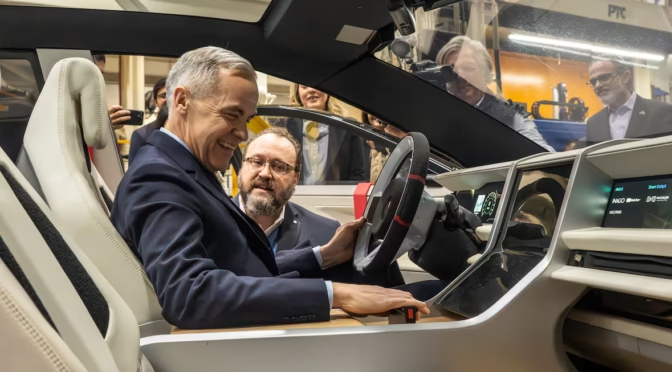
Goodbye EV sales mandate. Hello purchase rebates.

Prime Minister Mark Carney has unveiled a transformative shift in Canada’s electric vehicle (EV) policy, replacing the previous sales mandate with a consumer-focused incentive program. This new approach aims to accelerate EV adoption through financial incentives and infrastructure development.


šŸ” From Mandates to Incentives

The federal government is repealing the Electric Vehicle Availability Standard (EVAS), which mandated a specific percentage of EV sales. In its place, Canada will implement stricter greenhouse gas (GHG) emissions standards for light-duty vehicles, targeting a 75% EV adoption rate by 2035 and 90% by 2040.


šŸ’° Introducing the EV Affordability Program

To make EVs more accessible, the government is launching a five-year, $2.3 billion EV Affordability Program starting February 16, 2026. Key details include:

  • Incentives: Up to $5,000 for battery-electric and fuel-cell vehicles; up to $2,500 for plug-in hybrids.

  • Price Cap: Eligible vehicles must have a final transaction value up to $50,000.

  • Exemptions: The $50,000 cap does not apply to Canadian-made EVs and plug-in hybrids.

  • Eligibility: Vehicles must be manufactured in countries with which Canada has a free trade agreement.

These incentives will decrease over time, with EV rebates dropping to $4,000 in 2027, $3,000 in 2028 and 2029, and $2,000 in 2030.


⚔ Expanding Charging Infrastructure

To address range anxiety and support increased EV usage, the government is investing $1.5 billion through the Canada Infrastructure Bank to expand the national EV charging network. This initiative aims to make charging more convenient across the country.


šŸ­ Strengthening Domestic Manufacturing

Canada is allocating $3 billion from the Strategic Response Fund and up to $100 million from the Regional Tariff Response Initiative to support the auto industry’s transition to EV production. Additional measures include:

  • Tax Incentives: Implementation of the Productivity Super-Deduction and reduced corporate tax rates for zero-emission technology manufacturers.

  • Trade Partnerships: New agreements with countries like South Korea and China to attract investment and diversify the auto sector.


šŸ“ˆ Market Implications

This policy shift is expected to boost EV adoption and stimulate the Canadian auto industry. Companies like Tesla, General Motors, Ford, Honda, and Toyota may experience varying impacts based on their EV offerings and manufacturing locations.

For instance, Tesla’s Model Y Rear-Wheel Drive, priced at $49,990 and produced in Germany, may qualify for the new rebate, potentially increasing its competitiveness in the Canadian market.


Overall, Canada’s new strategy represents a significant move towards a more sustainable and consumer-friendly approach to EV adoption, balancing environmental goals with economic considerations.