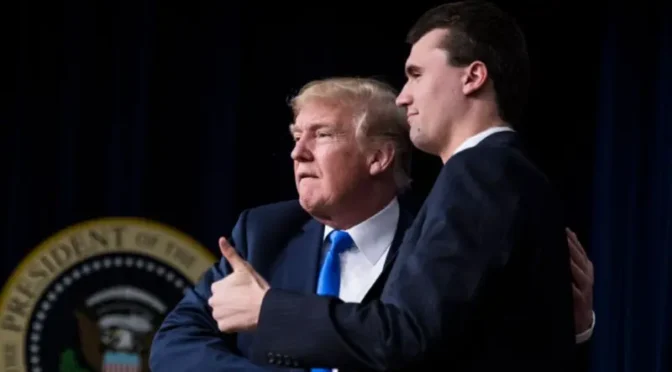
Trump’s Rhetoric : Too Little, Too Reckless

Headline: Trump’s Rhetoric After Charlie Kirk’s Assassination: Too Little, Too Reckless


The recent killing of Charlie Kirk, a high-profile conservative activist, has left the nation reeling. It was a moment that demanded sobriety, unity, and thoughtful leadership. Instead, much of what followed – especially from Donald Trump – exposed just how far we have drifted from those things.

Here are some reflections on why Trump’s response has been so problematic, even “idiotic,” depending on how one feels about the urgency of the moment.


What Trump Did Say

  1. He condemned “political violence” and the demonization of conservative voices, attributing blame to rhetoric coming from the “radical left.” The Guardian+1

  2. He called for “beating the hell” out of “radical left lunatics.” Politico

  3. He expressed empathy toward Kirk’s family, called Kirk “a great guy from top to bottom,” and pledged to award him the Medal of Freedom posthumously. People.com+2Politico+2


What’s So Troubling (Why It Feels Idiotic)

When people call his response “idiotic,” they usually mean one or more of the following:

  • Escalation over de-escalation: Killed or shot, this is precisely the moment to dial down inflammatory language. But phrases like “beat the hell out of radical left lunatics” do not calm things down. They stoke further division and can be seen as incitement, even if not intended.

  • Vague blame, zero accountability: Trump blames “the radical left” broadly. But there is no evidence (at least so far) that a specific organized “left” group planned or carried out the attack. In times like this, it matters what you know and what you assert. Blaming vague forces without evidence can be misleading and ethically dangerous.

  • Mixed messages about violence: Trump also said people should respond nonviolently. But juxtaposed with his calls to “beat … radical left lunatics,” that seems contradictory. On one hand, “we should condemn violence”; on the other, we’re urged to “beat” people who hold certain political views. That’s dangerous territory, because it risks justifying violence in the name of politics.

  • Moral responsibility of leadership: Someone in leadership (especially a former president who still wields influence) has more to lose by reckless rhetoric. Words matter. They shape culture, they signal what’s acceptable. If you cast a whole group as “lunatics” or “radical” without clarity, you risk legitimizing harassment, vigilantism, or violence by those who take you literally.

  • Missed opportunity for real unity: This was a chance to pause, reflect, build bridges—even just modestly. Offer condolences, call for better discourse, commission investigations, demand that violent speech be reined in on all sides. Instead, Trump took the path of sharpening partisan edges, as though the political fight must continue, even in the shadow of murder.


Why Some Will Defend Trump’s Approach

To be fair, it’s possible to see why he gave the response he did:

  • His base expects strong, aggressive rhetoric. “Standing firm” is seen by many as strength.

  • There is a real concern about how political rhetoric contributes to violence. Trump may believe that painting certain speech or groups as dangerous is necessary to mobilize.

But even granting those, there is a line between mobilizing political will and fueling further violence.


What Should Have Been Done

If one hopes for a better standard of leadership, here’s what a more responsible response might include:

  • Clear condemnation of violence and calls for patience while the facts are investigated.

  • Restraint in language: avoid demonizing language toward broad groups.

  • Acknowledgment that many have contributed to polarization—not just one side.

  • Concrete steps: for example, asking for reforms to how political speech is moderated or how threats are handled; supporting civil society efforts to bridge divides.

  • Focus on victims: empathizing with the family, showing genuine concern rather than turning the moment immediately into political ammunition.


Final Thought

The tragedy of Charlie Kirk’s death deserves more than political posturing. When a public figure is murdered, that should be a moment where rhetoric falls away and morality steps forward. Trump’s response fails that test. It doesn’t just wound; it risks making wounds worse by giving license to more extremes.

Let’s hope whatever comes next is grounded in respect, truth, and responsibility—not hollow soundbites.


News And Highlights

What’s Going On in Saint John • Rothesay • Quispamsis — Sept. 13

Open House in Quispamsis
If you’re house‐hunting, there’s an open house this weekend: 13 Meenans Cove Road in Quispamsis, happening Saturday, Sept. 13 from 12-2 PM. Go by and take a look! Instagram

Rothesay Photo Contest Winner Announced
The Town of Rothesay has revealed the winner of its “Through the Lens” photo contest for 2025 — congratulations to Amanda McCauley! Her work will be featured in upcoming town media and exhibits. rothesay.ca

Transit Update: KV Go in Effect
The Kennebecasis Valley (Rothesay & Quispamsis) continues with the KV Go transit demonstration project, providing free, accessible local transportation. If you haven’t already, check the new routes and schedules — it’s designed to help folks around here get where they need to go more easily.

Conditions Right Now

  • Clear skies, about 10 °C (50 °F)

  • Overnight, skies stay mostly clear. Temperatures drop into the low single digits (~5-10 °C / 42-50 °F)


 Coming Up This Morning → Afternoon

  • Early morning (before sunrise): cold, around 6-7 °C (42-45 °F)

  • By mid-morning: warming to ~13-16 °C (55-60 °F)

  • Around noon to early afternoon: reaching a high near 17 °C (62 °F) under mostly sunny skies


 What to Wear / Plan For

  • A light jacket or sweater for early morning

  • Comfortable layers: cool in the morning, mild by midday

  • Pleasant conditions for being outside during the day — likely good time for errands, walks, etc.


If you want, I can pull up the extended forecast (next few days) or show if there are any weather alerts in the Saint John area?


Hurricane Season 2025 Quiz

Hurricane Season 2025 Quiz

  1. When does the official Atlantic hurricane season run each year?
    A) May 1 – October 31
    B) June 1 – November 30
    C) July 1 – December 31
    D) April 1 – September 30

  2. Which agency forecasted “above-normal” activity for the 2025 Atlantic hurricane season, expecting 13-19 named storms?
    A) World Meteorological Organization
    B) NOAA (National Oceanic and Atmospheric Administration)
    C) Japan Meteorological Agency
    D) Environment Canada

  3. According to forecasts for the 2025 Atlantic hurricane season, how many of the named storms are expected to become major hurricanes (Category 3 or stronger)?

  4. Hurricane Erin (2025) in the Atlantic: which of the following is true?
    A) It was the first named storm of the season.
    B) It became a Category 5 hurricane.
    C) It made landfall in Florida as a major hurricane.
    D) It dissipated before reaching the Caribbean.

  5. What environmental factor(s) are cited as contributing to an above-average hurricane season in the Atlantic for 2025?
    (Short answer; list one or more.)

  6. What unusual pattern has been observed in the Atlantic so far in mid to late season 2025, despite already favorable seasonal conditions?

  7. Tropical Storm Barry (2025): where did it make landfall, and what was one of its major effects?

  8. For the Pacific hurricane season in 2025, what was the forecast by NOAA for the Eastern Pacific (in terms of named storms, hurricanes, or major hurricanes)?

  9. What does “ACE” stand for in the context of hurricanes, and why is it important when discussing a hurricane season?

  10. True or False:
    The climatological peak of Atlantic hurricane season is around September 10, and most hurricane activity historically happens between mid-August and mid-October.


Answer Key: Hurricane Season 2025 Quiz

  1. When does the official Atlantic hurricane season run each year?
    B) June 1 – November 30

  2. Which agency forecasted “above-normal” activity for the 2025 Atlantic hurricane season, expecting 13-19 named storms?
    B) NOAA (National Oceanic and Atmospheric Administration)

  3. According to forecasts for the 2025 Atlantic hurricane season, how many of the named storms are expected to become major hurricanes (Category 3 or stronger)?
    3 to 5 major hurricanes

  4. Hurricane Erin (2025) in the Atlantic: which of the following is true?
    B) It became a Category 5 hurricane

  5. What environmental factor(s) are cited as contributing to an above-average hurricane season in the Atlantic for 2025?
    Warm Atlantic sea surface temperatures, La Niña conditions, reduced wind shear, and high oceanic heat content

  6. What unusual pattern has been observed in the Atlantic so far in mid to late season 2025, despite already favorable seasonal conditions?
    A lull in tropical cyclone formation during parts of August–September despite very warm waters and favorable conditions

  7. Tropical Storm Barry (2025): where did it make landfall, and what was one of its major effects?
    Made landfall in Mexico’s Yucatán Peninsula; caused heavy rainfall and localized flooding

  8. For the Pacific hurricane season in 2025, what was the forecast by NOAA for the Eastern Pacific (in terms of named storms, hurricanes, or major hurricanes)?
    14–20 named storms, 7–11 hurricanes, 4–7 major hurricanes

  9. What does “ACE” stand for in the context of hurricanes, and why is it important when discussing a hurricane season?
    Accumulated Cyclone Energy — a measure of the total strength and duration of all tropical storms and hurricanes in a season. It’s used to gauge how active the season was overall.

  10. True or False:
    True — The climatological peak of Atlantic hurricane season is around September 10, with most activity between mid-August and mid-October.