Police seek public assistance

Story Harvested From Saint John Police Dept
Police seek public assistance in two property crime investigations that could be connected


File#: 24-1658, 1681

The Saint John Police Major Crime Unit are currently investigating two property crime incidents that occurred in the Loch Lomond Road area in East Saint John.

It is alleged that:

24-1658
On March 10, 2024, at approximately 3:26 a.m., property was stolen from a number of vehicles parked at a commercial site in the 200 block of St Martins Road. One of the vehicles was significantly damaged during this incident.

Surveillance video shows a suspect that appears to be wearing dark colored pants and a jacket with reflective material on it. There appears to be a blue hooded sweater underneath the jacket with the hood pulled up over the suspect’s head.

24-1681
On March 10, 2024, at approximately 3:43 a.m., several sheds had been broken into at a property located in the 4000 block of Loch Lomond Road. Surveillance shows a dark colored SUV parked behind the property and the suspect appears to be wearing dark colored clothing with reflective material on the jacket.

The Major Crime Unit are investigating. Detectives believe that these incidents are connected due to the proximity and timing of the crimes as well as the description of the suspect who appears on the video surveillance.

If you can identify the suspect in the photographs or, anyone with information is asked to contact the Saint John Police Force at 1-506-648-3333, or if you wish to remain anonymous, contact Crimestoppers at 1-800-222-8477 or 1-800-222-T.I.P.S.

Electric Vehicle ‘Euphoria is Dead

To the Surprise of No One

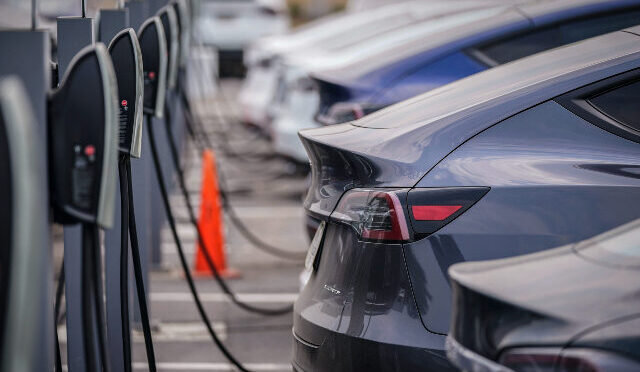
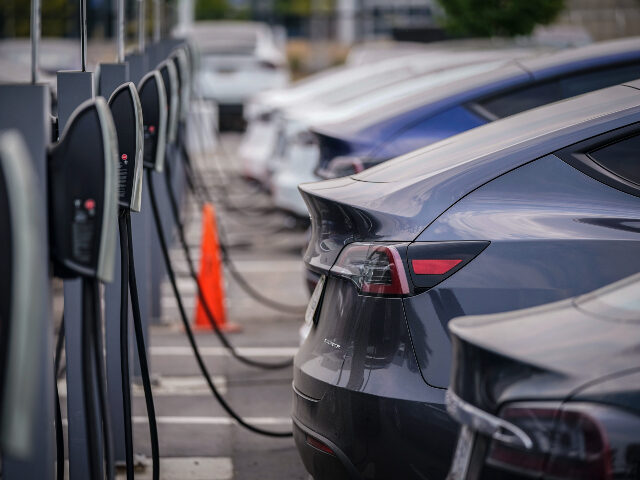
FILE - A group of Tesla cars line up at charging stations at a dealership in Littleton, Co
AP Photo/David Zalubowski, File
 

“Automakers from Ford Motor and General Motors to Mercedes-Benz, Volkswagen, Jaguar Land Rover and Aston Martin are scaling back or delaying their electric vehicle plans,” reports CNBC.

The headline says it all: “EV euphoria is dead. Automakers are scaling back or delaying their electric vehicle plans.”

Yeah, there’s a shock.

Gee, why-oh-why would people not want to purchase a super-expensive vehicle that can take more than an hour to charge — and that’s if you can find a charging station?

For years, the automotive industry has been in a state of EV euphoria. Automakers trotted out optimistic sales forecasts for electric models and announced ambitious targets for EV growth. Wall Street boosted valuations for legacy automakers and startup entrants alike, based in part on their visions for an EV future.

Now the hype is dwindling, and companies are again cheering consumer choice. Automakers from Ford Motor and General Motors to Mercedes-Benz, Volkswagen, Jaguar Land Rover and Aston Martin are scaling back or delaying their electric vehicle plans.

Even U.S. EV leader Tesla, which is estimated to have accounted for 55% of EV sales in the country in 2023, is bracing for what “may be a notably lower” rate of growth, CEO Elon Musk said in late January.

There is a host of other problems. Consumers are discovering a fully charged car does not last for as many miles as advertised. Cities are discovering their electric grids are in no shape to handle all the extra juice needed to power millions of electric vehicles.

EV sales are still expected to increase. Last year, they represented 1.2 million sales in the U.S. or 7.6 percent of total car sales. By 2030, that number is expected to climb somewhere between 30 and 39 percent (which still seems Pollyanna-ish to me). The movement now appears to be towards hybrids, which offer the best of both worlds. You have your battery and your gas-powered engine as a backup.

“EVs may be ‘the future’ but are struggling in the present,” per Morgan Stanley analyst Adam Jonas. “Hybrid sales are growing 5x faster than EVs in the US.”

The early adopters, the smug environmentalists and the trendy rich, have already bought in. Now, the car manufacturers have to encourage normal people, and we’re a little more circumspect. Do these cars really save you money? Sure, but only if you drive enough miles over ten whole years. At the same time, while EVs can cost less to maintain, they can also cost more to repair.

If you have a set routine, I get it. You unplug, drive from home to work, to the grocery store, to the gym, back to home, and plug back in. That makes sense for an EV. But the moment you have to drive outside of that comfort zone, it’s stress-out time. Will I find a charger along my route? Will the charger work? Will there be a line? How long will it take?

Naturally, the leftist Biden administration still plans to force the car industry into adopting impossible fuel standards and fining them billions if not met.

The Allance for Automotive Innovation weighed in:

The Alliance for Automotive Innovation, which represents General Motors, Toyota Motor, Volkswagen, Hyundai and others, said the National Highway Traffic Safety Administration Corporate Average Fuel Economy proposal “exceeds maximum feasibility” and that the agency projects “manufacturers will pay over $14 billion in non-compliance penalties between 2027 and 2032.”

Another estimate says, “such regulations would cost GM $6.5 billion in fines and Jeep parent Stellantis $3 billion. Ford’s “penalties would total about $1 billion.”

All of this, of course, will be passed on to the consumer,

This is the Green Religion, a fanatical faith that has nothing to do with science or economics. Democrats refuse to increase their electric grid even as they demand we buy electric cars that put more demand on the electric grid.

Kate Middleton Faces Backlash Over Photoshopped Picture

    Kate Middleton Faces Backlash Over Photoshopped Picture with Children: Why It Matters

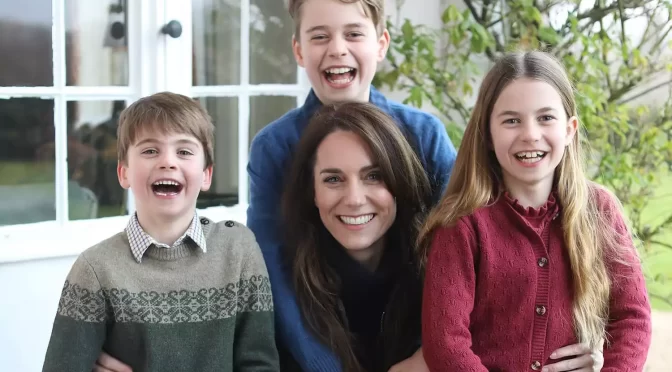
    In the latest royal controversy, Kate Middleton finds herself at the center of a storm after a photoshopped picture of her with her children surfaced online. The image, originally shared on social media, depicts the Duchess of Cambridge in what seems like a candid moment with Prince George, Princess Charlotte, and Prince Louis. However, closer scrutiny reveals evident alterations that have left many fans and observers deeply upset.

    Photoshopping images is not a new phenomenon, especially when it comes to public figures. Yet, when it involves members of the royal family, the impact and implications amplify significantly. The royal family, including Kate Middleton, symbolizes tradition, authenticity, and relatability to many people worldwide. Any deviation from these ideals can spark considerable disappointment and criticism.

   The issue with the photoshopped image lies not just in the act of editing itself, but in the message it sends. By altering images of herself and her children, Kate Middleton inadvertently perpetuates unrealistic beauty standards and fosters an environment where authenticity takes a backseat to perfection. It also raises questions about the pressure public figures face to maintain an idealized image, even at the expense of honesty and integrity.

    Moreover, the reaction to this incident underscores the public’s growing frustration with the pervasive culture of image manipulation and the unrealistic standards it imposes. In an era dominated by social media, where carefully curated snapshots often mask the complexities of real life, authenticity and genuineness become increasingly precious commodities.

    Critics argue that by participating in or condoning such practices, Kate Middleton and other public figures contribute to a culture of superficiality and erode the trust between themselves and their followers. In a world inundated with filtered realities, genuine connections become harder to establish, and the consequences can be far-reaching.

    Ultimately, the uproar over the photoshopped picture of Kate Middleton and her children transcends mere aesthetics. It serves as a poignant reminder of the importance of authenticity, transparency, and accountability, especially from those in positions of influence and authority. As public figures, they wield immense power to shape perceptions and influence societal norms. With this power comes a responsibility to uphold values that resonate with the public and promote a culture of honesty and integrity.

    In the end, the question arises: Who cares? We all should. Because what may seem like a trivial incident carries profound implications for our collective understanding of truth, beauty, and the evolving dynamics of our media-saturated world.

Pi Day

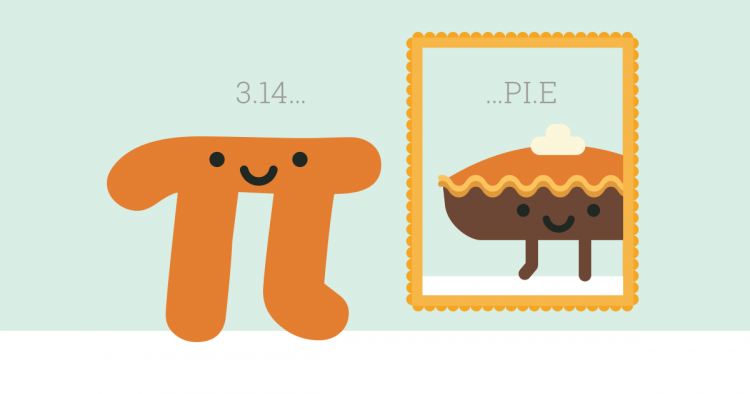
March 14 is Pi Day. It is a day to celebrate the mathematical constant pi (π) and to eat lots of pie.


It is celebrated in countries that follow the month/day (m/dd) date format, because the digits in the date, March 14 or 3/14, are the first three digits of π (3.14). Pi Day was founded by Physicist Larry Shaw in 1988.

Pi Approximation Day

Because everyone should be able to enjoy a fun mathematical holiday, people in countries that follow the day/month (dd/m) date format honor pi on Pi Approximation Day. The date of Pi Approximation Day – July 22 – when written in the day/month format or 22/7 corresponds to the fraction (22/7) that pi is usually depicted as.

There are many other days during the year when one can honor pi. Some of these are:

  • March 4: The day marks the passing of 14% of the 3rd month of the year.
  • April 5: By this day, 3.14 months of the year have passed.
  • November 10: The 314th day of the year (November 9 in leap years).

An Irrational Number

One of the oldest and the most recognized mathematical constant in the world, Pi (π) is the ratio of any circle’s circumference to its diameter. Its value is approximately equal to 3.14159265. It is an irrational number, which means it cannot be expressed as a ratio of whole numbers, and its decimal representation never ends or repeats.

In recent years, mathematicians have called for replacing pi by tau (τ) as a way to describe the relationship between a circle’s circumference and its radius. In order to spread the word about the advantages of tau over pi, mathematicians around the world celebrate Tau Day on June 28.