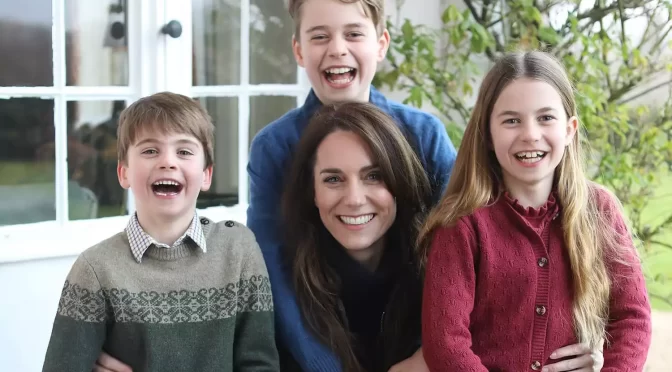
Kate Middleton Faces Backlash Over Photoshopped Picture with Children: Why It Matters
In the latest royal controversy, Kate Middleton finds herself at the center of a storm after a photoshopped picture of her with her children surfaced online. The image, originally shared on social media, depicts the Duchess of Cambridge in what seems like a candid moment with Prince George, Princess Charlotte, and Prince Louis. However, closer scrutiny reveals evident alterations that have left many fans and observers deeply upset.
Photoshopping images is not a new phenomenon, especially when it comes to public figures. Yet, when it involves members of the royal family, the impact and implications amplify significantly. The royal family, including Kate Middleton, symbolizes tradition, authenticity, and relatability to many people worldwide. Any deviation from these ideals can spark considerable disappointment and criticism.
The issue with the photoshopped image lies not just in the act of editing itself, but in the message it sends. By altering images of herself and her children, Kate Middleton inadvertently perpetuates unrealistic beauty standards and fosters an environment where authenticity takes a backseat to perfection. It also raises questions about the pressure public figures face to maintain an idealized image, even at the expense of honesty and integrity.
Moreover, the reaction to this incident underscores the public’s growing frustration with the pervasive culture of image manipulation and the unrealistic standards it imposes. In an era dominated by social media, where carefully curated snapshots often mask the complexities of real life, authenticity and genuineness become increasingly precious commodities.
Critics argue that by participating in or condoning such practices, Kate Middleton and other public figures contribute to a culture of superficiality and erode the trust between themselves and their followers. In a world inundated with filtered realities, genuine connections become harder to establish, and the consequences can be far-reaching.
Ultimately, the uproar over the photoshopped picture of Kate Middleton and her children transcends mere aesthetics. It serves as a poignant reminder of the importance of authenticity, transparency, and accountability, especially from those in positions of influence and authority. As public figures, they wield immense power to shape perceptions and influence societal norms. With this power comes a responsibility to uphold values that resonate with the public and promote a culture of honesty and integrity.
In the end, the question arises: Who cares? We all should. Because what may seem like a trivial incident carries profound implications for our collective understanding of truth, beauty, and the evolving dynamics of our media-saturated world.