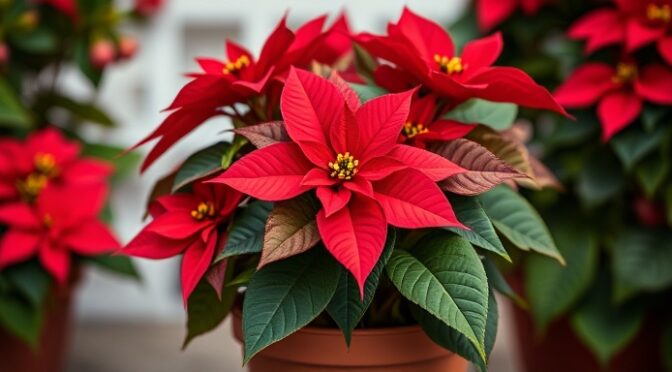
Growing poinsettias (Euphorbia pulcherrima) successfully requires some care, as they are sensitive to their environment. Although they are commonly purchased as holiday plants, you can grow them year-round and even encourage them to rebloom the following holiday season. Here’s a step-by-step guide on how to grow and care for poinsettias:
1. Choosing a Location
- Light: Poinsettias need bright, indirect sunlight for at least 6 hours a day. Place them near a sunny window, but avoid direct sunlight, as it can scorch the leaves.
- Temperature: Keep them in a room with temperatures between 65°F and 75°F (18°C–24°C). They don’t like the cold or drafts, so avoid placing them near doors, windows that open, or vents. Temperatures below 50°F (10°C) can damage the plant.
- Humidity: Poinsettias prefer moderate humidity levels. Indoor heating can dry out the air, so you might want to increase humidity using a humidifier or by placing the plant on a tray with water and pebbles.
2. Watering
- When to water: Poinsettias like moist soil, but they don’t tolerate being waterlogged. Water them when the top inch of soil feels dry to the touch.
- How to water: Water the plant thoroughly until water drains from the bottom of the pot. Be sure to empty the saucer beneath the pot to prevent root rot.
- Avoid overwatering: Poinsettias are prone to root rot if left sitting in water. Make sure the soil has good drainage and never let the plant sit in water for extended periods.
3. Fertilizing
- When to fertilize: If you’re keeping your poinsettia long-term (especially after the holidays), start fertilizing in spring, once new growth appears.
- What to use: Use a balanced, all-purpose fertilizer (like 10-10-10 or 20-20-20) every 2 to 4 weeks during the growing season (spring and summer). Stop fertilizing in late fall when you want to prepare the plant for its winter bloom.
4. Pruning
- After blooming: Once the colorful bracts fade (usually in late winter or early spring), prune the plant back to about 4–6 inches above the soil to encourage bushy growth.
- During the growing season: You can prune lightly throughout the growing season to shape the plant and prevent it from becoming leggy. Cut off any damaged or dead stems to maintain healthy growth.
5. Re-potting
- When to repot: If the poinsettia outgrows its container, repot it in spring after pruning. Choose a slightly larger pot with good drainage.
- Soil mix: Use a well-draining potting mix. A mixture of peat moss, perlite, and compost works well. Ensure the new pot has good drainage holes.
6. Encouraging Rebloom
Poinsettias require a specific light cycle to encourage the colorful bracts to develop again for the next holiday season. This process is called “photoperiodism.”
- Starting in early fall (around September-October): Place the plant in complete darkness for 14 hours each night for about 8–10 weeks. You can either move the plant to a dark room or cover it with a box or cloth from 5 p.m. to 8 a.m. daily.
- During the day, ensure the plant gets bright light for the other 10 hours.
- Avoid artificial light: Even small amounts of indoor light during the dark period can delay or prevent the bracts from turning red.
- Keep temperatures stable: Maintain a temperature of around 65–70°F (18–21°C) during this period.
By following this routine, the poinsettia should develop vibrant bracts and small yellow flowers by late November or December.
7. Common Pests and Problems
- Whiteflies, aphids, and mealybugs: These pests can infest poinsettias. Use insecticidal soap or neem oil to control them.
- Leaf drop: This can occur due to underwatering, overwatering, or sudden temperature changes (e.g., cold drafts or too much heat). Ensure stable conditions and proper watering practices.
8. Outdoor Care (In Warm Climates)
In warmer climates (USDA zones 9-11), poinsettias can be grown outdoors. If planting outside:
- Choose a spot with partial sun.
- Ensure well-draining soil.
- Water regularly during the growing season, but reduce watering in winter when the plant goes dormant.
Quick Care Summary:
- Light: Bright, indirect sunlight.
- Water: Keep soil moist, but avoid waterlogging.
- Temperature: 65°F–75°F (18°C–24°C).
- Fertilize: During growing season (spring to fall).
- Reblooming: Provide 14 hours of darkness per day in fall to trigger color change.
With proper care, your poinsettia can thrive year-round and brighten your home each holiday season!