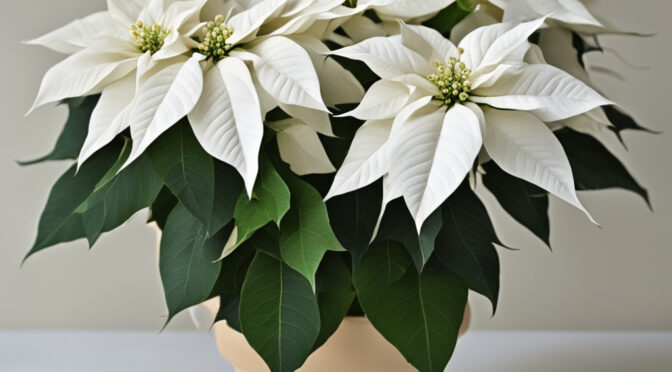
The poinsettia (Euphorbia pulcherrima) is a popular plant known for its vibrant red and green foliage, commonly associated with Christmas celebrations. Its history spans across cultures, from its origins in Mexico to its global status as a holiday symbol today.
Origins in Mexico
The poinsettia is native to southern Mexico and Central America, where it grows as a perennial shrub in tropical forests. The plant was known to the Aztecs long before Europeans arrived in the Americas. They called it Cuetlaxochitl (pronounced “kwet-la-sho-she”), which translates to “flower that withers” or “flower of leather,” referring to the texture of its leaves. The Aztecs valued the poinsettia for both its beauty and utility:
- They used its red bracts (the colored leaves surrounding the actual flowers) to make dye for clothing and textiles.
- The plant’s milky sap, or latex, was used to treat fevers and other medical conditions.
The Legend of the Poinsettia
There is a Mexican legend that links the poinsettia to Christmas. According to the story, a poor girl named Pepita, having no gift to bring to the Christ child, gathered some roadside weeds on her way to a Christmas Eve service. When she laid them at the altar, the weeds miraculously transformed into bright red poinsettias. From then on, they became known as “Flores de Nochebuena” (Flowers of the Holy Night), associated with Christmas in Mexico.
Introduction to the United States
The poinsettia was introduced to the United States by Joel Roberts Poinsett, an American diplomat and botanist. Poinsett was the first U.S. ambassador to Mexico, appointed in 1825. During his time in Mexico, he encountered the plant and was struck by its vibrant red leaves. In 1828, he sent cuttings of the plant back to his greenhouses in South Carolina, where he propagated and distributed them.
Poinsett was an avid botanist and shared the plant with friends and botanical gardens. In time, the plant gained popularity in the U.S. and became associated with Christmas. In his honor, the plant was named “poinsettia” in English. December 12th, the day of his death, is celebrated as National Poinsettia Day in the U.S.
Commercialization and Global Popularity
Poinsettias owe much of their commercial success to the Ecke family in the 20th century. The family, based in California, pioneered methods to grow and market poinsettias as potted plants, making them widely available during the holiday season. Paul Ecke, Sr., in particular, discovered a way to make poinsettias grow in a more compact and bushy form, perfect for decorative purposes.
The family developed poinsettias into the commercially successful holiday plant they are today by heavily promoting them on television shows like The Tonight Show and Bob Hope’s Christmas specials. They also introduced new varieties of poinsettias with different colors, including pink, white, and variegated patterns, although the red variety remains the most popular.
Symbolism and Modern Use
Today, the poinsettia is a global symbol of Christmas, widely used in decorations and floral displays. While its original association with Christmas comes from Mexican legend and Catholic tradition, its adoption worldwide is largely due to its commercial success. Its red bracts symbolize the blood of Christ, and the star-shaped arrangement of the leaves is said to represent the Star of Bethlehem.
Interesting Facts
- The colored parts of the poinsettia are not flowers but modified leaves called bracts. The actual flowers are the small, yellow centers.
- Poinsettias have been hybridized into a variety of colors, although the red version is still the most popular.
- Contrary to popular belief, poinsettias are not highly toxic to humans or pets, though ingestion may cause mild irritation.
The poinsettia’s journey from an Aztec dye plant to a holiday staple is a fascinating example of how cultural and botanical history can intersect, spreading a native plant from Mexico to homes around the world.