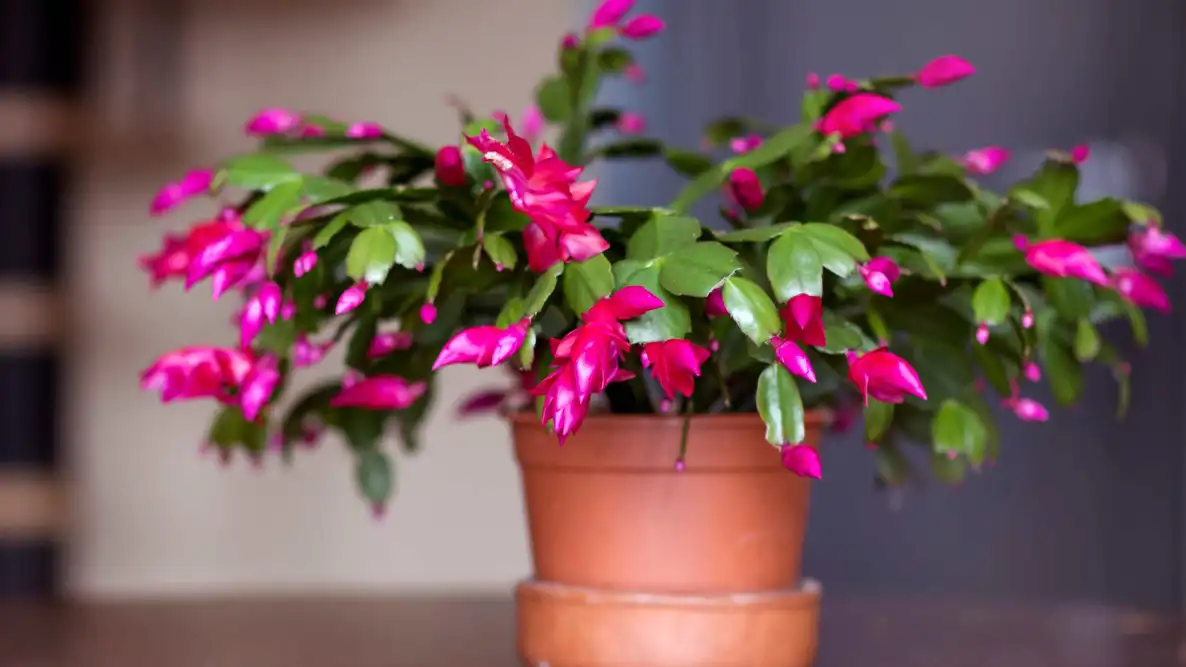
The Christmas cactus (Schlumbergera spp.), also known as Schlumbergera bridgesii, is a popular houseplant that blooms during the winter holiday season, hence its festive name. Despite being called a “cactus,” it is a tropical plant native to the coastal mountains of southeastern Brazil. Christmas cacti belong to the family Cactaceae, but unlike desert cacti, they thrive in humid, shaded environments, which is why they require different care than most traditional cacti.
Here are some key characteristics and care tips for a Christmas cactus:
1. Appearance
- Leaves: The Christmas cactus has flattened, segmented stems that are often mistaken for leaves.
- Flowers: It produces bright, tubular flowers in shades of pink, red, white, or purple. The flowers typically bloom in December, although they can bloom multiple times a year under the right conditions.
2. Care Requirements
- Light: While they enjoy bright, indirect light, avoid direct sunlight, which can scorch their stems.
- Watering: Water thoroughly but allow the top inch of soil to dry out between waterings. These plants are sensitive to overwatering, so well-drained soil is essential to avoid root rot.
- Humidity: Christmas cacti prefer higher humidity levels compared to desert cacti. You can increase humidity by placing a tray of water near the plant or misting it occasionally.
- Temperature: They thrive in temperatures between 60–70°F (15–21°C) and prefer cooler nighttime temperatures in the 50–60°F (10–15°C) range, especially before blooming.
- Fertilizer: During the growing season (spring to early fall), you can feed them with a diluted liquid fertilizer every few weeks.
3. Blooming
- Encouraging Blooms: To trigger blooming, the plant benefits from cooler temperatures and long, uninterrupted nights (12-14 hours of darkness) for about six weeks before you expect flowers. This mimics the natural conditions in their native habitat.
- Post-bloom care: After blooming, allow the plant to rest with reduced watering and feeding, then resume normal care in spring.
4. Propagation
- Christmas cacti are easily propagated by cutting a segment of the stem and allowing it to dry for a day or two before planting it in moist soil. New roots should form within a few weeks.
5. Common Issues
- Dropping buds/flowers: This can be caused by sudden changes in light, temperature, or watering habits.
- Pests: They are generally pest-resistant but can occasionally suffer from mealybugs or spider mites.
These plants are long-lived and can become heirloom plants, often passed down from generation to generation. With proper care, a Christmas cactus can thrive for many years and bring holiday blooms year after year!