Canadian Parliament resumes

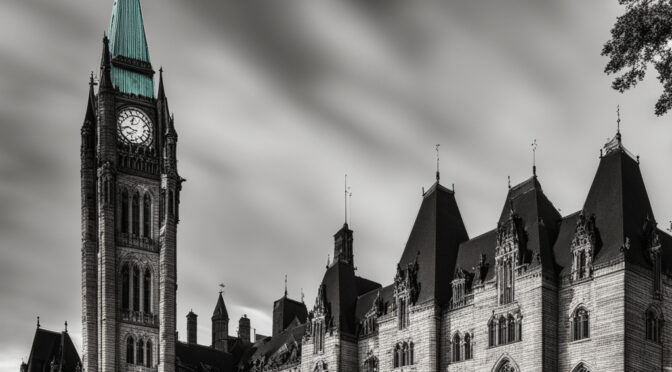
As Canadian Parliament resumes today, the heated debate over the carbon tax takes center stage once again. Prime Minister Justin Trudeau, Conservative leader Pierre Poilievre, and NDP leader Jagmeet Singh are all expected to clash over the policy that has divided both politicians and Canadians alike.

Trudeau remains firm on his government’s carbon pricing strategy, framing it as a critical tool in the fight against climate change. He argues that the tax incentivizes cleaner energy solutions while providing rebates to offset costs for families.

On the other side, Poilievre is ramping up his criticism, calling for the tax to be scrapped entirely. He’s using the rising cost of living as a rallying point, claiming that the carbon tax is punishing everyday Canadians, especially in rural areas, where heating and transportation costs are higher. He continues to frame the policy as an affordability crisis, linking it to skyrocketing inflation and fuel prices.

Jagmeet Singh, while supporting climate action, is also voicing concerns that the Liberals are not doing enough to protect low-income Canadians. He’s pushing for stronger social safety nets alongside environmental policy to ensure that working families aren’t bearing the brunt of green initiatives.

With all eyes on Parliament Hill, the battle lines are drawn, and the carbon tax will be at the heart of what is expected to be a contentious fall session. Canadians can expect fiery exchanges and a continued struggle to balance environmental stewardship with economic realities.

On this day in history – September 16

 September 16

  • 1982 Members of a right-wing Lebanese militia massacre 1500-3000 people in two Beirut-area refugee camps

    The killings took over three days in the Palestinian refugee camps of Sabra and Shatila and were led by the Lebanese Christian Phalangist militia.

  • 1978 An earthquake measuring 7.7 on the Richter Scale rocks the city of Tabas in Iran

    More than 11,000 people were killed during the natural disaster.

  • 1963 Malaysia is created

    The Federation of Malaya united with Sabah, Sarawak, and Singapore to create Malaysia. Singapore left the arrangement two years later.

  • 1920 A bomb explodes on Wall Street, New York killing 38 people

    The Wall Street Bombing, as the incident is known, was the deadliest such act on American soil to that date. It is still not known who was responsible for the bombing.

  • 1908 General Motors Corporation is founded in Flint, Michigan by William C. Durant and Charles Stewart Mott

    The company, also known as GM, was one of the world’s largest manufacturers of cars and trucks. Most notably, the company manufactured Buick, Cadillac, Chevrolet, Pontiac, and Hummer brand cars.


Cable News Networks Still Trying to Sway U.S. Elections in Their Favor


In the age of 24-hour news, cable networks continue to hold significant sway over public opinion, especially during U.S. election cycles. But it’s become more apparent than ever that many of these networks are less focused on informing voters and more concerned with shaping the narrative to align with their own political biases.

Networks like CNN, Fox News, and MSNBC have been accused of tailoring their content to fit partisan agendas, often amplifying stories that suit their desired outcomes while downplaying or ignoring those that don’t. This selective reporting can create echo chambers where viewers only receive information that reinforces their existing beliefs, making it difficult for people to engage with differing perspectives.

As election seasons heat up, the line between news and commentary continues to blur. With political pundits pushing specific narratives and guests with strong partisan leanings dominating airwaves, it’s hard to separate fact from spin. Whether it’s overly critical coverage of certain candidates or giving favorable airtime to others, it seems that these networks are more interested in tipping the scales than letting the democratic process play out organically.

The result? A fragmented electorate that is often more polarized than informed. Instead of acting as neutral arbiters, cable news networks seem more focused on securing ratings and influence by catering to ideological extremes. In a time when voters need objective, fact-based reporting more than ever, it’s troubling that these networks continue to prioritize their own agendas over journalistic integrity.

In the end, the real question is: are they helping to shape a better-informed electorate, or just trying to swing the election in their favor? The answer might depend on which channel you’re watching.

Canadian Federal Elections Quiz


1. What is the maximum length of time between federal elections in Canada?

  • a) 3 years
  • b) 4 years
  • c) 5 years
  • d) 6 years

2. What type of electoral system does Canada use for federal elections?

  • a) Proportional representation
  • b) Ranked-choice voting
  • c) First-past-the-post
  • d) Mixed-member proportional

3. Who is eligible to vote in Canadian federal elections?

  • a) Any resident of Canada
  • b) Canadian citizens 16 years of age and older
  • c) Canadian citizens 18 years of age and older
  • d) Permanent residents of Canada

4. Which institution is responsible for overseeing federal elections in Canada?

  • a) The Canadian Electoral Commission
  • b) Elections Canada
  • c) Parliament of Canada
  • d) The Governor General

5. Which of the following political parties has never formed a government at the federal level?

  • a) Liberal Party
  • b) Conservative Party
  • c) New Democratic Party (NDP)
  • d) Bloc Québécois

6. In what year did women gain the right to vote in federal elections across Canada (excluding Indigenous women)?

  • a) 1916
  • b) 1918
  • c) 1920
  • d) 1940

7. What is the role of the Governor General in Canadian federal elections?

  • a) Organizes and oversees elections
  • b) Declares the results of elections
  • c) Dissolves Parliament and calls an election
  • d) Counts and certifies votes

8. Which Prime Minister won the most federal elections in Canadian history?

  • a) John A. Macdonald
  • b) Pierre Trudeau
  • c) William Lyon Mackenzie King
  • d) Stephen Harper

9. In a minority government, which of the following must happen for the government to continue?

  • a) The Prime Minister must win an election every year
  • b) The Prime Minister’s party must have over 50% of the seats in the House of Commons
  • c) The government must maintain the confidence of the House of Commons
  • d) The government must win a referendum

10. How many seats are there in the House of Commons as of the 2021 federal election?

  • a) 300
  • b) 338
  • c) 400
  • d) 435

11. What is a “writ of election” in Canadian federal elections?

  • a) A document that declares the winner of an election
  • b) A legal order to hold an election
  • c) A form voters sign before casting their ballot
  • d) A certificate given to newly elected Members of Parliament

12. How long is the official campaign period for Canadian federal elections?

  • a) 30 days
  • b) 50 days
  • c) 78 days
  • d) It varies, but is usually between 36 and 50 days

13. Which Prime Minister famously said, “Just watch me,” in response to a question about how far he would go during the October Crisis?

  • a) John Diefenbaker
  • b) Pierre Trudeau
  • c) Jean Chrétien
  • d) Brian Mulroney

14. What happens if two parties have the same number of seats after a federal election?

  • a) The Governor General decides who becomes Prime Minister
  • b) A second election is held
  • c) The party with the most votes overall wins
  • d) The Speaker of the House breaks the tie

15. Which Canadian federal election saw the highest voter turnout in history?

  • a) 1958
  • b) 1963
  • c) 1984
  • d) 1972

Answer Key:

  1. c) 5 years
  2. c) First-past-the-post
  3. c) Canadian citizens 18 years of age and older
  4. b) Elections Canada
  5. d) Bloc Québécois
  6. b) 1918
  7. c) Dissolves Parliament and calls an election
  8. c) William Lyon Mackenzie King
  9. c) The government must maintain the confidence of the House of Commons
  10. b) 338
  11. b) A legal order to hold an election
  12. d) It varies, but is usually between 36 and 50 days
  13. b) Pierre Trudeau
  14. a) The Governor General decides who becomes Prime Minister
  15. a) 1958